Choosing a ceramic coating is a big decision, especially for drivers who want long-term protection without the hassle of frequent waxing or constant upkeep. Many car owners in the US invest in ceramic coating, believing it lasts “a lifetime,” only to find the results vary widely. The truth is, the lifespan depends on several things: the quality of the product, how it was applied, the weather you drive in, and how you care for your vehicle afterward. This guide clears up confusion so you know exactly what to expect and how to make your coating last as long as possible. If you’re planning to protect your car correctly or have been searching for answers before booking a service, this breakdown provides the clarity you need.
At OC Tint Solutions, we apply professional-grade ceramic coatings designed to handle real road conditions in the US. Whether you’re dealing with intense sun, winter salt, or heavy daily driving, we ensure your coating is installed correctly so you enjoy maximum durability and shine.
What Is Ceramic Coating and How Does It Protect Car Paint?
Ceramic coating is a liquid polymer that bonds to your car’s clear coat, forming a durable layer that shields the surface from UV rays, stains, chemicals, and light scratches. The coating cures into a solid, transparent layer that improves gloss and makes cleaning easier. It doesn’t sit on the paint like car wax. Instead, it attaches at a molecular level, which is why it lasts far longer than traditional protectants.
Ceramic coatings are built with materials like SiO₂ (silicon dioxide), SiC (silicon carbide), or TiO₂ (titanium dioxide). These ingredients are known for heat resistance, high hardness levels, and hydrophobic behavior. Many US drivers turn to ceramic coatings because they want a strong, low-maintenance solution that keeps their cars looking cleaner longer.
How Ceramic Coating Works (Paint Bonding, Gloss, Hydrophobic Effect)
Ceramic coating helps prevent damage from UV rays, fading, oxidation, acidic contaminants, road film, bird droppings, and chemical stains. The layer also reduces the tendency of dirt and water to cling to the surface. This is why cars with ceramic coatings stay cleaner for longer and require fewer washes.
However, ceramic coating does not make your vehicle scratch-proof or dent-proof. It won’t stop rock chips or deep abrasions, and it cannot repair paint defects. That’s why many people combine ceramic coating with PPF (paint protection film) in high-impact areas such as bumpers and hoods.
How the Bonding Process Determines Durability?
The bonding process is what separates long-lasting coatings from short-term ones. Ceramic coating cures and attaches to the clear coat, creating a semi-permanent layer. When installed properly, this bond can withstand harsh weather, UV exposure, and chemicals that would typically break down wax or sealants.
The key factors during bonding include:
- Paint correction quality
- Surface preparation
- Proper leveling of the coating
- Controlled curing environment
- Professional equipment
If any step is skipped, the coating will not reach its expected lifespan. At OC Tint Solutions, all applications include complete prep work so the coating bonds correctly and lasts as long as advertised.
Ceramic Coating vs Wax vs Sealant (Longevity Comparison Table)
Below is a simple comparison for US car owners who want to understand how ceramic coating ranks in terms of durability:
| Protection Type | Average Longevity | Protection Level | Maintenance Needs |
| Car Wax | 1–2 months | Low | High |
| Paint Sealant | 6–12 months | Medium | Medium |
| Ceramic Coating (DIY) | 1–2 years | Medium-High | Medium |
| Ceramic Coating (Pro) | 3–7 years | High | Low |
| Advanced Ceramic (SiC or multi-layer) | 7–10+ years | Very High | Low |
How Long Does Ceramic Coating Last On Average?
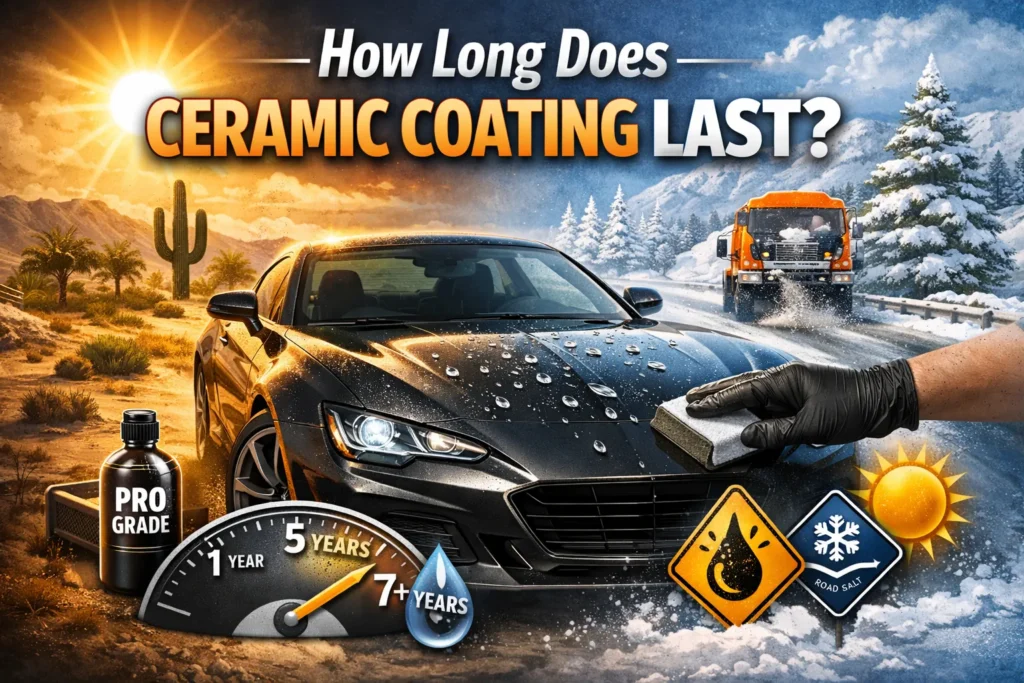
Every ceramic coating has its own expected lifespan, but real-world results vary based on driving conditions, installation, and care. Most professional coatings last 3 to 7 years, while DIY coatings usually last 1 to 2 years. High-grade formulas, especially those containing silicon carbide, can last up to a decade with proper maintenance.
US drivers need to remember that marketing claims often describe “ideal conditions.” Daily driving, outdoor parking, and harsh winters can shorten the lifespan. The good news is that a well-maintained ceramic coating still gives strong protection even as it ages.
Realistic Lifespan Based on Type (Professional, DIY, Spray Coatings)
Different coating types last for different timeframes:
- Spray ceramic coatings: 3–6 months
- DIY ceramic kits: 1–2 years
- Professional ceramic coatings: 3–7 years
- Multi-layer professional coatings: 7–10+ years
Spray coatings are great for a quick shine but don’t offer long-term durability. DIY coatings are affordable but require careful prep, which many people struggle with. Professional coatings bonded under controlled conditions give the most dependable results.
Lifespan by Coating Grade
Ceramic coatings are categorized by durability:
- Entry-level coatings (1 year): Good for basic gloss and water behavior
- Mid-tier coatings (3–5 years): Most popular; solid protection for most drivers
- High-tier coatings (7–10 years): Multi-layer systems with advanced chemistry
- “Lifetime” Coatings: Performance varies; requires strict maintenance and inspections
These grades also determine warranty options. High-tier coatings often include yearly service checks, which help maintain their longevity.
Factors That Affect How Long Ceramic Coating Lasts
The lifespan of a ceramic coating depends heavily on how the car is used, cleaned, and stored. Even the strongest coating loses strength more quickly when the surface is constantly exposed to extreme UV, heavy rain, or harsh cleaning chemicals. Cars driven daily on busy highways experience a different level of wear than those that spend most of their time in a garage. Many people believe that once ceramic coating is applied, it works forever without care, but that’s not how the technology functions.
Coatings form a strong layer, but they react to their surroundings every day. Sun exposure speeds up oxidation, road salt eats away at the top layer, and repeated contact with dirty wash mitts causes micro-scratches that weaken the coating’s bond. Understanding these factors helps car owners manage real expectations and take steps to protect their investment. This also shows why working with a trusted detailing company like Octint Solutions ensures the coating is installed correctly and supported with the right aftercare plans.
UV Exposure and Climate: Hot States vs Snow and Road Salt Regions
Cars exposed to sunlight for long hours usually see their ceramic coating wear down faster because UV rays break down the top layer over time. In hotter states like Arizona, Florida, Nevada, and Texas, sunlight is much stronger than in other areas, which means car owners must clean and maintain the coating more often.
On the other hand, colder states with heavy winter use a lot of road salt, which can weaken the coating unless it is washed off quickly. Rain, snow, and humidity also impact durability. Even though ceramic coatings are hydrophobic, repeated cycles of wet and dry conditions eventually degrade their strength. Parking in covered areas is one of the easiest ways to increase lifespan.
Driving Habits and Road Conditions
Where and how you drive plays a huge role. High-traffic areas, gravel roads, construction zones, salted streets, and highways with loose debris expose the coating to constant shock and contamination. Drivers who wash their cars aggressively, visit non-touchless car washes, or wipe dust off with a dry towel also reduce the coating’s life. Gentle washing, proper drying, and avoiding rough contact can easily add months or even years to the coating’s performance.
Quality of the Ceramic Coating Installed
Not all ceramic coatings are equal. Professional-grade coatings use more potent chemical formulations that bond more deeply into the paint, while cheaper retail coatings offer shorter protection. High-quality coatings from reputable brands can last anywhere from 5 to 7 years, while basic sprays may last only a few months. Many car owners assume all coatings perform the same, but the quality of ingredients, the thickness of the application, and the number of layers matter. This is why professional installers often show different package options, helping owners choose based on their driving habits and the age of the vehicle.
Quality of Installation
Ceramic coating is a detailed process that requires proper paint correction, surface decontamination, and controlled application. If the paint is not polished correctly, the coating will not bond well and will fail faster than expected. Incorrect curing time, improper lighting, or uneven product spreading also cause early breakdown.
Many vehicle owners try DIY kits and later discover that streaking, high spots, or thin coverage caused the coating to fail within a year. Professional installation eliminates those risks. At Octint Solutions, certified installers follow strict preparation steps, ensuring the coating bonds fully to the surface for maximum durability. This alone can add several years to the coating’s performance.
Maintenance and Washing Routine
Ceramic coatings require proper maintenance to remain strong. The idea of “never wash your car again” is a myth that leads to disappointment. Using pH-neutral shampoo, soft wash mitts, and clean microfiber towels is the foundation of a safe maintenance routine. Using strong cleaners, dish soap, or random chemicals strips the coating slowly, even if the car looks clean afterward.
The frequency of washing also matters. Dirt buildup traps moisture and contaminants on the surface, which damages the coating over time. Regular washes every 1–2 weeks help maintain the hydrophobic layer and prevent premature wear. Some drivers use ceramic boosters every few months to refresh slickness and keep the top layer strong.
Environmental Contaminants
Road tar, bird droppings, industrial fallout, tree sap, and brake dust can weaken a ceramic coating if left untreated. These contaminants contain acids, oils, or metal particles that stick to the surface and eat into the coating’s top layer. Ceramic coating does resist these materials better than wax or sealants, but it is not a shield against everything.
If these contaminants remain on the surface for too long, the coating loses its water-repellent properties and becomes dull. Quick cleaning and regular decontamination help prevent this. Many car owners book quarterly maintenance packages to keep the coating in strong condition throughout the year. We also offers maintenance visits for customers who want long-lasting protection without guesswork.
Signs Your Ceramic Coating Is Wearing Out
Loss of Hydrophobic Performance
One of the first things people notice is that water no longer beads or sheets off the surface the way it used to. While this may simply mean the top layer is clogged with dirt, it may also indicate the coating is beginning to weaken. Water spreading across the surface rather than forming tight beads indicates that the coating is losing its protective properties.
The Surface Feels Rough Instead of Smooth
A worn coating often feels gritty or sticky. This usually happens due to contamination buildup or thinning of the coating. When the smooth surface disappears, dirt attaches more easily, and washing feels less satisfying. Decontamination might restore some smoothness, but long-term roughness typically means the coating is fading.
Fading Gloss or Reduced Shine
Ceramic coatings enhance the paint’s depth and shine, so when the coating wears down, the car looks slightly dull, no matter how much it is washed. This is a clear indicator that the coating may need a refresh or complete reapplication. Gloss loss can also happen when the coating absorbs micro-scratches from improper washing.
Water Spots and Etching Stay Visible
Ceramic coatings help resist water spots, but once the coating weakens, those marks remain visible longer and require more effort to remove. If water spots don’t wipe off easily, the coating may no longer be protecting the surface effectively.
Dirt Sticks Faster, and Washing Takes Longer
If the car gets dirtier more often or requires more labor-intensive scrubbing, the coating might be losing its self-cleaning properties. Fresh coatings repel dirt, but worn coatings allow dust and grime to cling to the surface.
Ceramic Coating Lifespan on Different Vehicle Surfaces
Ceramic Coating Lifespan on Car Paint
High-quality ceramic coatings on paint typically last anywhere from 2 to 7 years, depending on the product, installer, and care routine. Daily-driven cars exposed to harsh weather may fall toward the lower range, while garage-kept cars with proper washing habits often stay protected longer. Regular booster applications can help maintain the slick surface and prevent the coating from weakening early.
Ceramic Coating on Glass
Glass surfaces usually hold ceramic coating for 1 to 2 years. The constant motion of the windshield wipers makes the coating wear down faster on the front glass. Side windows and rear windows tend to keep protection longer because they are not exposed to the same friction.
Ceramic Coating on Wheels
Wheels face constant heat, brake dust, and road grime, so wheel coatings typically last 1 to 2 years. They still help significantly compared to unprotected wheels, as brake dust becomes easier to clean and does not embed as deeply. Cleaning wheels with safe products helps maintain their coating.
How to Make Ceramic Coating Last Longer?
Even the strongest ceramic coating can fail early if it is not adequately cared for. Many car owners unknowingly shorten the lifespan of their coating by visiting rough car washes, using strong cleaning products, or letting environmental dirt sit on the surface for too long. The easiest way to extend protection is to follow a consistent washing routine and avoid aggressive scrubbing. A proper wash every one to two weeks keeps the coating clean and prevents buildup that blocks hydrophobic behavior. Using pH-neutral shampoo, soft microfiber mitts, and clean wash buckets extends the coating’s lifespan. A gentle drying towel also protects against micro-scratches. These small habits help keep the coating strong for years, especially in areas with high UV exposure or heavy winter salt.
Use pH-Neutral Car Shampoo for Ceramic Coated Cars
pH-balanced shampoo protects the coating’s top layer by removing dirt without stripping the protective chemicals. Standard household cleaners, dish soap, or random off-the-shelf degreasers may leave the car looking clean, but they quickly weaken the coating. Using the wrong product even once can damage the hydrophobic features. A good pH-neutral shampoo paired with clean water is the safest approach for long-term results.
Avoid Automatic Brush Washes and Swirl Mark Damage
Many car washes rely on spinning brushes that slap against the paint, creating scratches and wearing down the coating. These brushes collect dirt from previous cars, which makes them even more damaging. Touchless car washes are safer, but a proper hand wash is still the best option. Car owners who want to protect their ceramic coating for the long run should avoid any wash that relies on contact machines.
Use a Ceramic Coating Booster Spray Every Few Months
A ceramic booster adds a fresh top layer that improves slickness and revives the hydrophobic effect. This does not replace the full coating but adds more strength to the existing layer. Many boosters last a few months and help the coating perform better through seasonal changes. They also allow the car to resist water spots and dust buildup. This is one of the easiest ways to extend coating life without having to buy a full reapplication.
Proper Drying to Prevent Water Spots (Microfiber or Touchless Drying)
Water left on the paint can leave mineral spots that slowly eat into the coating. Using a clean microfiber drying towel prevents streaks and protects the coating’s finish from unnecessary wear. Some drivers use a blow dryer to avoid touching the paint at all, which is a safe method for coated cars.
Covered Parking and Shade to Reduce UV Breakdown
Parking under shade reduces UV exposure, which is one of the biggest causes of coating breakdown. Covered parking also keeps the coating from constant rain or snow contact. Even small daily habits like choosing a shady spot at work or keeping the car in a garage can add months to the coating’s durability.
Quarterly or Biannual Ceramic Coating Maintenance Packages
Many detailing shops offer quarterly or biannual maintenance packages that keep the coating in good condition. These packages usually include decontamination, hydrophobic testing, and small refresh treatments. For customers who want the most extended possible protection, this is a wise investment.
Is Ceramic Coating Worth It? Cost vs Long-Term Value for US Car Owners
Ceramic coating offers strong protection, long-lasting shine, easier washing, and improved resistance to daily wear. For many US drivers, especially those in sunny or snowy regions, the value is clear because paint damage and fading are common problems. By creating a harder surface layer, ceramic coating helps reduce swirl marks and keeps the car looking newer for longer. Compared to wax, which usually lasts one to three months, ceramic coating offers a much longer timeline, often years, making it a cost-efficient upgrade.
Even if the initial cost is higher, the long-term savings can be significant. The car needs fewer professional washes, paint correction becomes less frequent, and the vehicle maintains better resale value. A properly coated car also stays cleaner between washes because dirt doesn’t bond as strongly to the surface. For drivers who take pride in their vehicles or want easier upkeep, ceramic coating is often considered worth the investment.
Ceramic Coating FAQs
How long does ceramic coating last on a daily-driven car?
Most quality coatings last 2 to 5 years with proper washing. Cars stored in garages often get a longer life.
Can ceramic coating last 10 years?
Some premium coatings have extended warranties, but real-world results depend on maintenance and driving conditions.
Does ceramic coating wash off?
Not easily. However, strong chemicals or aggressive washing can weaken the top layer.
How do I know if my coating needs to be replaced?
When water behavior fades, gloss drops, and dirt sticks faster, it may be time for a refresh.
Can I apply a new ceramic coating over the old one?
The surface usually needs polishing first to remove the worn coating and restore proper bonding.
Final Thoughts: Getting the Longest Ceramic Coating Lifespan
Ceramic coating is one of the most effective ways to protect a vehicle’s paint, improve shine, and simplify long-term care. The lifespan varies based on climate, installation quality, and maintenance habits, but with proper care, a ceramic coating can deliver years of strong protection. For US drivers looking to keep their vehicles looking clean and glossy while reducing upkeep time, ceramic coating is a wise investment. Those who want reliable results often turn to Octint Solutions for expert installation, quality materials, and long-lasting performance. With the proper care routine and professional support, your coating can keep your car looking sharp far longer than traditional options like wax or sealants.