Many drivers want their vehicles to stay glossy, easy to clean, and protected from harsh weather. But choosing the proper protection can feel confusing. Auto stores are filled with ceramic sprays that promise fast shine and quick protection. At the same time, professional installers offer ceramic coating services that provide long-term results. The problem is that most people don’t understand the difference, which leads to frustration, wasted money, and protection that doesn’t last.
If you’ve ever wondered whether a ceramic spray can replace a real ceramic coating, or which option gives better protection for the paint on your car, this guide will help you make a clear decision. With the experience we have installing high-quality ceramic coatings and Paint Protection Film at OC Tint Solutions, we see firsthand how different these products perform.
What Is Ceramic Coating?
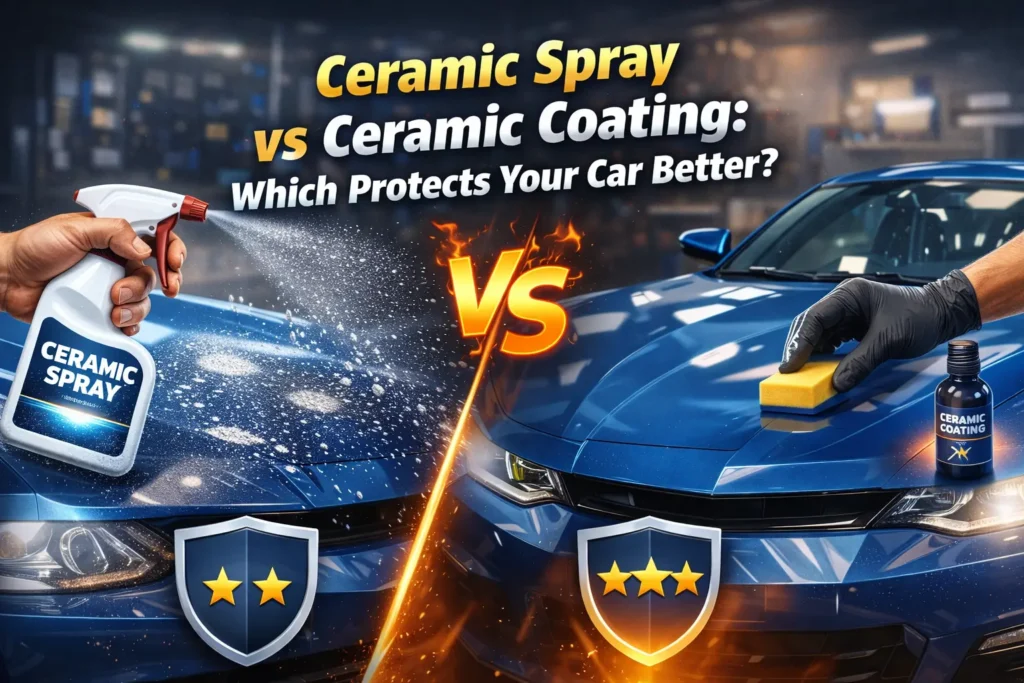
Ceramic coating is a long-lasting protective layer applied to a vehicle’s paint. It bonds to the clear coat at a deeper level compared to sprays, forming a shield that can resist chemicals, UV rays, light scratches, and environmental contaminants. This coating contains a high percentage of SiO₂ (silicon dioxide) and, in some formulas, graphene or silicon carbide. These ingredients create a rigid, water-repelling surface that keeps the vehicle cleaner for longer.
A proper coating needs professional application because the vehicle must be washed, decontaminated, and often polished before installation. This preparation ensures the coating bonds to a clean, level surface. Once cured, the coating offers a durable layer that can last for years. Drivers notice a deep shine, more transparent color, and smoother surfaces, which help with daily cleaning. Ceramic coatings are widely chosen by people who want a long-term solution instead of frequently applying short-term products.
What Is Ceramic Spray?
Ceramic spray is a lighter and more user-friendly alternative. It contains small amounts of SiO₂ mixed with water or polymer-based formulas. This makes it easy to apply at home, as no special tools or curing time are required. You simply spray it onto a clean surface and wipe it off. Ceramic sprays add short-term shine, improve water beading, and give light surface protection. However, they do not bond to the clear coat as well as a true ceramic coating does.
Drivers like ceramic sprays because they’re fast, inexpensive, and easy to use. They’re great for a quick refresh before a weekend trip or after a car wash. But it’s important to understand that sprays break down quickly under sun exposure, rain, snow, road salt, and strong soaps. What looks glossy on day one may fade in a few weeks. While sprays serve a purpose, they cannot offer the same level of protection or longevity as a true ceramic coating.
Ceramic Spray vs Ceramic Coating: Quick Comparison Table
Here is a breakdown to help you see the fundamental differences:
| Feature | Ceramic Spray | Ceramic Coating |
| Durability | 1–3 months | 2–7 years |
| Protection level | Light | Strong |
| Water beading | Good | Excellent |
| Resistance to chemicals | Low | High |
| Application | Easy DIY | Professional |
| Cost | Low upfront | Higher upfront |
| Gloss depth | Surface-level shine | Deep, long-lasting gloss |
| Bonding | Sits on top of paint | Bonds into clear coat |
This table shows that ceramic spray is more of a temporary top-up product, while ceramic coating is a long-term paint protection solution that handles real-world exposure much better.
How Each Product Protects Your Paint
Ceramic spray and ceramic coating both use SiO₂, but the concentration and bonding method make a huge difference. Ceramic spray forms a thin layer on top of the paint, improving shine and water resistance but offering limited protection against harsh elements. Because the layer is thin, it wears off quickly under weather changes, frequent washing, or UV exposure.
Ceramic coating works differently. It has a much higher concentration of active ingredients and forms a stronger bond. Once applied, the coating crosslinks with the clear coat, creating a semi-permanent protective layer. This layer becomes resistant to chemicals, acid from bird droppings, road grime, and brake dust. The coating also helps prevent paint oxidation by blocking UV rays. Because the coating is thicker, it shines deeper and lasts much longer.
Drivers who want their vehicle to stay cleaner with less effort usually notice a big difference once they switch from sprays to a professionally installed coating.
Strength of Protection (Real-World Performance)
Ceramic spray provides basic surface protection. It can help reduce light water spots and make cleaning easier, but it is not strong enough to withstand daily exposure for long periods. Rain, dust, and car wash brushes can wear it down quickly. Most drivers find they need to reapply sprays every few weeks to maintain the same level of shine.
Ceramic coating performs much better in real-world driving. It resists acidic bird droppings, harsh detergents, sunlight, and road chemicals. It also helps prevent micro scratches from washing. The protection level stays strong even after months of use. This is why coated vehicles often look newer and easier to clean compared to cars protected only with sprays.
If your car sits outside, travels long distances, or faces harsh climates, ceramic coating provides a stronger shield that sprays cannot match.
Durability Comparison
Ceramic spray is short-term. Most sprays last between 4 to 12 weeks, depending on weather, washing habits, and the type of product. Sun and rain break them down quickly because they don’t form a bonded layer.
Ceramic coating is long-term. High-quality coatings last from 2 to 7 years with proper maintenance. They stay strong because they bond to the clear coat instead of sitting loosely on top. This long lifespan makes ceramic coating a wise investment for new cars, daily drivers, and vehicles exposed to harsh weather.
Active Ingredient Differences (SiO₂, Graphene & More)
Ceramic spray usually contains low levels of SiO₂, typically 5–15%. Because this concentration is low, it cannot create a strong bond with paint. Sprays rely mostly on polymers and water-based formulas that offer short-term shine and easy application.
Ceramic coating has much higher SiO₂ content, often 50–90% depending on the product. Some coatings include advanced ingredients such as graphene or silicon carbide, which improve durability and resistance. Higher active content means stronger chemical resistance, deeper gloss, better hardness, and longer life. The difference in ingredients is one of the main reasons a real coating outperforms ceramic spray by a large margin.
Application Process: DIY Convenience vs Professional Protection
Ceramic spray is easy for anyone to apply because the process requires little preparation. Most drivers can spray it on after a regular wash, wipe it with a clean microfiber towel, and enjoy instant shine. This simplicity is what makes ceramic spray popular with DIY users. However, the lack of preparation means the spray sits on top of existing flaws, and the thin layer quickly begins to break down. Dirt that was not correctly removed or light scratches that were not polished beneath will show through, weakening the overall finish. While sprays are fast, they provide only surface-level improvement.
Ceramic coating requires a more careful and detailed process. Before applying a real coating, installers wash the car thoroughly, remove iron deposits, clay-bar the paint, and often complete paint correction to remove swirl marks or dull spots. This preparation ensures the coating bonds cleanly and lasts for years. Because of the preparation steps, ceramic coatings are best handled by trained installers. The process also includes proper curing time in a controlled environment. Shops like OC Tint Solutions use dedicated tools, clean indoor space, and premium coatings to ensure the best possible results. For drivers who want protection that holds up over years of sun, weather, and road grime, the professional route provides far stronger results than a quick DIY spray.
Cost Comparison: Short-Term Savings vs Long-Term Value
At first glance, the cost difference between ceramic spray and ceramic coating looks dramatic. Ceramic spray is affordable, often priced between $10 and $40 per bottle. This makes it appealing for drivers who want a quick shine or temporary protection. The downside is that the spray must be reapplied often, sometimes every few weeks or at least every season, to maintain shine and protection. Over the course of a year, drivers may end up buying several bottles, spending more time applying the spray, and still not achieving the long-term benefits they want.
Ceramic coating requires a higher upfront cost due to the preparation and advanced chemistry of the product. Professional ceramic coating services usually range from $500 to $2,000 or more, depending on the vehicle size, number of layers, and paint condition. While the initial price is higher, the long-term value is substantial because the coating lasts for years instead of months. Drivers save time washing their car, avoid frequent reapplications, and benefit from a deeper shine and better paint protection. Over a 3–5-year period, ceramic coating is often more cost-effective than buying sprays again and again. If you want a quote based on your vehicle type, OC Tint Solutions offers transparent pricing and service options.
Simple Cost Breakdown Table
| Protection Type | Initial Cost | Reapplication Frequency | Long-Term Cost (3 Years) |
| Ceramic Spray | $10–$40 | Every 4–12 weeks | $200–$400+ |
| Ceramic Coating | $500–$2,000 | None (with basic maintenance) | $500–$2,000 |
Over time, ceramic coating becomes the better financial choice for most drivers who want lasting results.
Gloss & Finish Quality
Ceramic spray creates a quick shine that looks impressive the moment it’s applied. This is one of its biggest appeals. The improved gloss is noticeable, but it is shallow and can fade after a few washes or weather changes. Because the spray layer is thin, it enhances the outer surface but does not improve depth or clarity below the paint. Drivers who enjoy a freshly washed look often use sprays because they’re fast and convenient, but they must repeat the process regularly to keep that shine alive.
Ceramic coating provides deeper and longer-lasting gloss. The coating fills microscopic paint imperfections and bonds to the clear coat, which gives the finish a rich, smooth, and reflective look. This shine comes from the coating’s thickness and strong bonding ability, not from surface oils or temporary fillers. The gloss from a real ceramic coating stays consistent through washing, rain, and sun exposure. Even after years, the coating maintains a smooth, reflective surface when correctly cared for. For anyone who loves a long-lasting, showroom-quality shine, ceramic coating is the stronger choice.
Scratch Resistance and Surface Hardness
Ceramic spray offers very light resistance to micro-scratches. It can help reduce tiny marks left behind by washing or wiping, but the layer is too thin to provide proper scratch protection. Many sprays advertise “scratch resistance,” but this usually refers to resistance against light dust or dirt—not real scratches. Any severe abrasion, such as contact with a bush, gravel, or rough towel, will go right through the spray layer and mark the paint.
Ceramic coating is much stronger because it forms a thicker and bonded layer on top of the clear coat. While no coating can make a car entirely scratch-proof, a quality coating can significantly reduce micro-scratches and swirl marks. It provides a more rigid surface that resists washing-related damage and helps preserve the paint underneath. Drivers who want noticeable improvement in scratch resistance, especially on dark-colored cars, see a significant difference with professional coating. This added protection helps the car look better for longer and reduces the need for polishing sessions.
Chemical Resistance and Environmental Protection
Ceramic spray can help with mild contamination, but it does not offer strong defense against harsh chemicals. Bird droppings, tree sap, strong soaps, and road salt can still reach the paint and cause staining or dull spots if not removed quickly. Because sprays are thin, they break down under acidic conditions and require frequent reapplication to maintain any level of protection.
Ceramic coating is engineered to resist stronger contaminants. The bonded layer prevents many chemicals from soaking into the paint. It also slows oxidation and helps block UV rays that cause fading. Drivers who live in areas with intense sunlight, heavy pollution, tree coverage, or harsh winters notice longer-lasting protection with a coating. The coating keeps the paint vibrant even in challenging environments. For anyone who parks outdoors or drives long distances, ceramic coating offers much better defense.
Hydrophobic Behavior: Water Beading and Water Sheeting
Ceramic spray enhances water beading instantly. After applying the spray, water forms small beads and rolls off more easily, giving the impression of strong protection. While this looks impressive, the effect fades quickly, often within a few weeks. Rain, dust, or strong soaps can weaken the spray’s hydrophobic layer, leaving the surface less responsive.
Ceramic coating delivers stronger, longer-lasting hydrophobicity. Because the coating bonds to the paint, the water-repelling effect remains consistent through months and years of washing. Water beads tightly and slides off the paint, helping reduce water spots and making drying easier. The hydrophobic layer also allows the car stay cleaner between washes because dirt has a harder time sticking to the surface. For drivers who want minimal effort and easier cleaning, the hydrophobic benefits of a real coating are hard to match.
Maintenance Guide for Ceramic Sprays and Ceramic Coatings
Maintenance varies depending on which product you choose. Ceramic spray requires frequent reapplication because its protection wears off quickly. After each wash or weather change, you may need another layer to maintain consistent shine and water behavior. This repeated effort is manageable but requires time and attention.
Ceramic coating requires much less maintenance. Regular washing with a pH-balanced soap is usually enough to keep the coating clean and glossy. Avoiding harsh chemicals and abrasive tools will help preserve the top layer. Some drivers use ceramic spray as a “topper” on top of the coating to refresh shine and hydrophobicity, which works well as part of periodic maintenance. If you want long-term protection with less effort, coating is easier to maintain.
Using Ceramic Spray on Top of Ceramic Coating
Many drivers wonder whether ceramic spray can be applied over a ceramic coating, and the answer is yes. Ceramic spray works well as a maintenance booster for a professionally installed coating. It helps refresh gloss, add extra slickness, and improve water behavior between full washes. Sprays also make the surface feel smoother, which reduces friction during washing and drying. Because sprays are light and easy to apply, they provide a quick way to improve the appearance of a coated vehicle without affecting the bonded layer.
Ceramic spray does not replace the main coating layer, but it complements it. It adds a temporary top layer that helps maintain the coating’s benefits over the long term. Many installers, including OC Tint Solutions, recommend using a ceramic spray every few months to help the coating stay in its best shape. Drivers who use sprays as toppers notice fewer water spots, easier washing, and a consistent shine year-round.
Which Option Is Better for New Cars, Older Cars, and Daily Drivers?
Choosing between ceramic spray and ceramic coating depends on your vehicle’s age, paint condition, and how you use your car. New cars benefit the most from ceramic coating because the paint is still fresh and free of significant defects. Applying a coating early helps preserve that new-car look for years and protects the paint before the environment can cause damage. For buyers who want to keep their new purchase in great shape, a coating is one of the best upgrades they can invest in.
Older cars with faded or scratched paint can still benefit from a coating, but additional preparation might be needed. Paint correction removes dull spots and swirl marks so the coating bonds better and looks cleaner. Ceramic spray is a simple way to improve shine on older cars, but it will not hide defects. Daily drivers, trucks, and SUVs that are constantly exposed to the road are better off with a ceramic coating, as it handles harsh conditions much more effectively. For weekend cars or rarely driven vehicles, ceramic spray can be a quick and affordable way to keep the paint looking fresh. Drivers who want stronger long-term protection often choose coating because it holds up better under sunlight, rain, and long drives.
Real-World Results: Which Product Performs Better?
In real-world driving conditions, ceramic coating consistently delivers a deeper shine, longer-lasting protection, and better resistance to the elements. Cars that receive professional ceramic coating stay cleaner for longer because dirt and grime have a harder time sticking to the coated surface. In harsh climates, such as areas with strong sunlight, heavy rain, snow, or road salt, the coating provides a stronger shield. Drivers in sunny states see fewer signs of fading, while drivers in snowy regions notice better protection against salt and chemicals.
Ceramic spray, on the other hand, performs well for short-term needs. It can boost gloss before a trip, refresh a coated car, or give a nice finish before weekend drives. But it cannot compare to the stability and durability of a bonded coating layer. When exposed to long-term road debris, hard water, or UV rays, sprays weaken quickly. For drivers who wash their vehicles often or live in areas with unpredictable weather, ceramic coating shows far better overall performance.
Final Verdict: Which Protects Your Car Better?
Ceramic coating provides the strongest, longest-lasting paint protection for most drivers. It bonds to the paint, offers years of durability, and protects against chemicals, sun damage, and light scratches. The gloss stays deep and consistent even after many washes. For anyone who cares about long-term preservation, ceramic coating delivers far better protection than sprays.
Ceramic spray is useful but temporary. It gives fast results, improves shine, and boosts water behavior, but it wears off quickly. It’s ideal for drivers who want a quick refresh or a maintenance topper for their coating. While sprays have their place, they cannot match the overall power of a professionally installed ceramic coating.
If your goal is to keep your vehicle looking new for years and make washing easier, ceramic coating is the better choice. Sprays work well for quick shine but fall short for long-term protection.
Why Professional Installation Matters
A ceramic coating’s performance depends heavily on how well it is applied. Proper surface preparation is critical: the vehicle must be cleaned, decontaminated, and corrected before coating. Without these steps, the coating may not bond well and may fail prematurely. Professional installers use controlled environments, high-quality tools, and advanced application methods to ensure a smooth finish and strong adhesion.
Having your coating installed by an experienced shop like OC Tint Solutions ensures reliable results. Their team carefully prepares each vehicle, applies premium coatings, and finishes the job with attention to detail. This level of care makes the difference between a coating that lasts a few months and one that performs for years. Drivers who choose professional installation get better durability, smoother gloss, and protection backed by a guarantee.