Washing your car is a crucial part of maintaining its appearance, but did you know that certain mistakes during the process can actually damage the paint? You might notice that over time, your paint loses its deep luster and begins to show thousands of tiny, spider-web-like scratches when viewed in the sun. These are not accidental; they are the direct result of common car washing mistakes that damage your paint every single weekend. At OC Tint Solutions, we see the aftermath of these errors daily. Understanding that your car’s paint is a delicate, multi-layered system, not just a hard shell, is the first step toward preserving your vehicle’s value and beauty for the long haul.
Using the Wrong Soap or Household Detergents
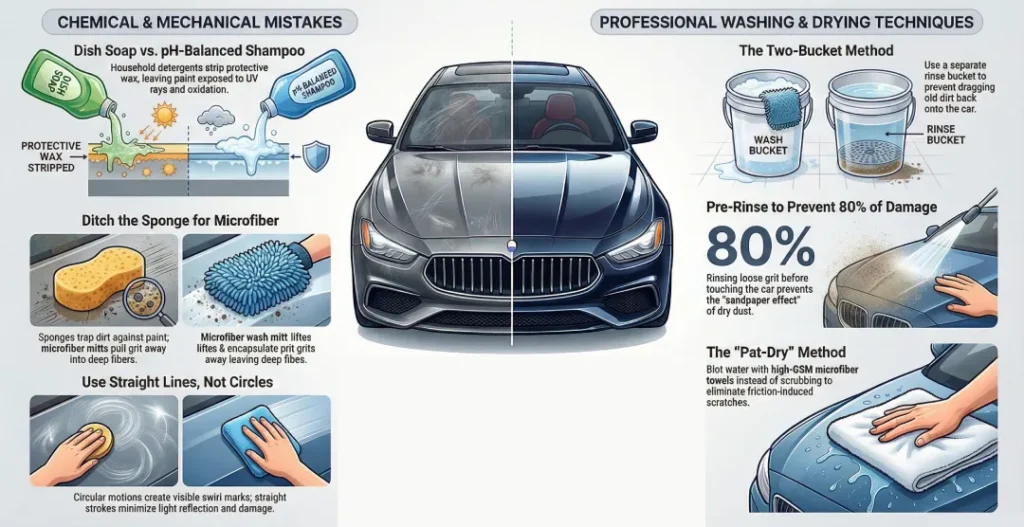
One of the most frequent errors we encounter is the use of household detergents, like dish soap or laundry soap, to wash a car. While these products are excellent at cutting through grease on a frying pan, they are far too aggressive for automotive finishes. Dish soap is designed to strip away oils and organic matter, which means it instantly dissolves the protective wax or sealant you’ve applied to your car. Without this sacrificial layer, your clear coat is left completely exposed to UV rays, salt air from the coast, and industrial fallout, leading to premature fading and oxidation.
Stripping the Sacrificial Layer
Your car needs a layer of protection to act as a barrier between the environment and the paint. When you use harsh household soaps, you are essentially resetting your paint to a naked state. This makes the surface feel grabby or rough, which increases friction during the wash and makes it much easier for dirt to cause scratches. In the heat of an Anaheim afternoon, this stripped surface can also suffer from clear coat failure much faster, as the UV inhibitors in the paint are forced to work without any help from a wax or ceramic topper.
The pH-Balanced Solution
Professional car shampoos are engineered with a neutral pH level and high lubricity. Unlike dish soap, these specialized formulas contain surfactants that lift dirt away from the surface and encapsulate it in a slippery bubble. This lubrication is vital because it allows your wash mitt to glide over the paint rather than dragging grit across it. By using a pH-balanced soap, you ensure that you are cleaning the dirt while leaving your protective wax, sealant, or ceramic coating perfectly intact.
Using the Wrong Tools and Techniques
If chemistry is the invisible killer of paint, then improper friction is the visible one. The tools you use to touch your car determine whether you are cleaning it or sanding it. Many people still reach for the classic large-pore yellow sponge or an old bath towel, not realizing that these materials are essentially traps for microscopic rocks. In a high-dust environment like the Inland Empire or Orange County, even a single wipe with the wrong tool can leave permanent marring that can only be removed through professional paint correction.
Sponges vs. Microfiber Wash Mitts
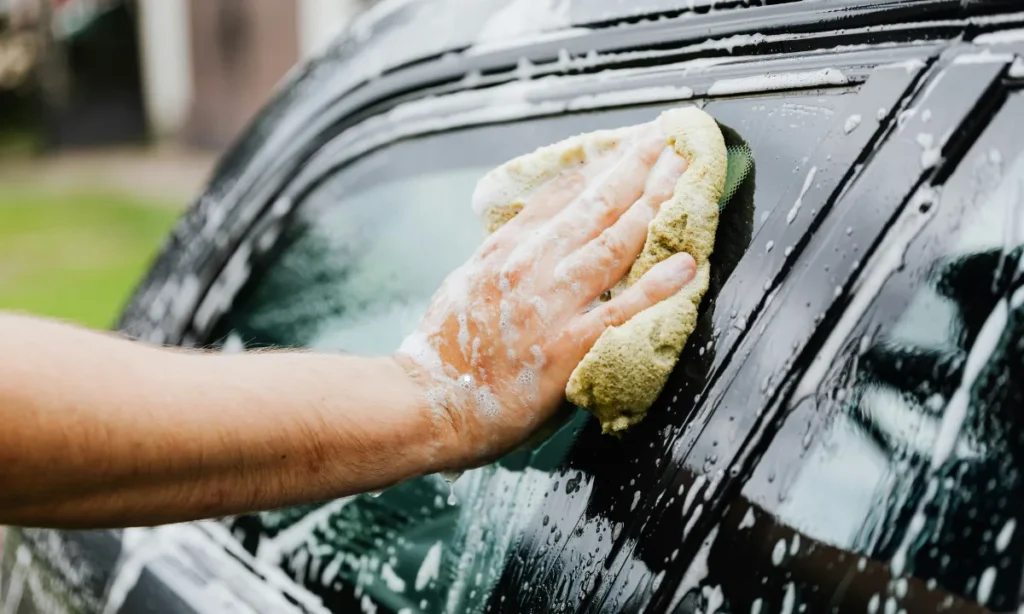
The traditional sponge is a major contributor to paint damage because its flat, non-porous surface keeps dirt trapped between the sponge and the paint. As you move the sponge, you are effectively scrubbing that dirt into the clear coat. Professional-grade microfiber wash mitts, however, feature long, soft fibers that pull dirt deep into the mitt and away from the paint. This drastically reduces the amount of contact between the debris and the vehicle, making the wash process much safer for your finish.
The Danger of Circular Motions
We have all seen the wax-on, wax-off circular motion in movies, but it is actually a recipe for disaster when washing. If a small piece of grit gets caught in your mitt, a circular motion keeps that particle in the same area, grinding it into the paint over and over again. This creates the classic swirl marks that are so visible on dark cars. Instead, we teach our clients to use long, straight, horizontal strokes. If a scratch does occur from a straight-line motion, it is far less visible to the human eye and much easier for a professional to polish out later.
Skipping the Critical Pre-Wash Phase
Many car owners make the mistake of jumping straight into the contact wash, putting their soapy mitt directly on the car. This is a primary cause of paint damage because the surface is often covered in loose dust, sand, and grit. If you don’t remove this layer first, your wash mitt acts like a sanding block, grinding those particles into the clear coat as you wipe. For Orange County drivers, whose vehicles are often coated in fine road dust and coastal salt, skipping the pre-wash phase is a guaranteed way to dull your finish.
The Sandpaper Effect of Dry Dust
Dry dust and grit are abrasive. When you apply water and soap without a proper rinse, you are simply turning that dust into a liquid sandpaper slurry. This creates thousands of microscopic scratches that break up light reflection, making your paint look hazy over time. To avoid this, you must always start with a thorough rinse using a hose or pressure washer to knock off as much loose debris as possible. This simple five-minute step can prevent up to 80% of the wash-induced damage your car might otherwise suffer. For those who just drove off the lot in Irvine or Anaheim, our advice is whether you should ceramic coat a new car before the first rock chip happens.
Snow Foam and Pressure Rinsing
The most professional way to handle a pre-wash in 2026 is by using snow foam. By applying a thick layer of foam and letting it dwell on the paint for a few minutes, you allow the soap’s surfactants to emulsify and lift dirt away from the surface. When you rinse the foam off, it carries the bulk of the abrasive grit with it. This leaves a much cleaner surface for your wash mitt to handle. If you don’t have a foam cannon, a high-pressure rinse from top to bottom is the next best thing to ensure you aren’t dragging old road grime across your hood.
Cross-Contamination: The Single Bucket Trap
The one bucket and a sponge method is perhaps the most common car washing mistake that damages your paint. When you use only one bucket, you are constantly dipping your dirty wash mitt back into the same water you just used to clean the car. This means the water quickly becomes a dark, gritty soup of the very dirt you are trying to remove. By the time you reach the second half of the car, you are effectively washing your paint with liquid sandpaper. The best way to prevent wash-induced scratches is to add a sacrificial layer like ceramic coating to see how a hydrophobic barrier makes dirt slide off, drastically reducing the friction needed during a wash.
How the Two-Bucket Method Saves Your Paint
The Two-Bucket Method is the industry standard for a reason. You fill one bucket with your pH-balanced soapy water (the Wash bucket) and a second bucket with plain, clean water (the Rinse bucket). After you wipe a panel of your car, you dip the dirty mitt into the Rinse bucket first. This dislodges the dirt and grit into the clean water before you reload the mitt with fresh soap from the Wash bucket. This keeps your soapy water clean and ensures you are only ever putting fresh, grit-free suds onto your paint.
The Role of Grit Guards
To make the two-bucket system even more effective, you should use Grit Guards at the bottom of each bucket. These are perforated plastic inserts that allow heavy sediment and rocks to settle at the bottom of the bucket while keeping your wash mitt from touching them. When you swirl your mitt in the rinse bucket, the grit falls through the guard and stays trapped at the bottom. This adds an extra layer of security, ensuring that the water your mitt touches is always as clean as possible.
Environmental Errors: Timing and Temperature
In a sunny climate like Anaheim or Costa Mesa, the environment plays a huge role in the success of your car wash. Many people choose to wash their cars in the middle of a clear, sunny day, not realizing that the heat is working against them. High temperatures cause water and soap to evaporate almost instantly, which leads to two major types of paint damage: chemical etching and stubborn mineral deposits.
Washing in Direct Sunlight
When soap dries on a hot car panel before you can rinse it off, the chemicals can actually bake into the clear coat. This leaves behind streaks and a cloudy haze that is often impossible to remove with a standard wash. Furthermore, the rapid evaporation of water leaves behind the minerals (like calcium and magnesium) found in Orange County’s hard water. These water spots act like tiny magnifying glasses for the sun’s UV rays and can eventually etch permanent rings into your paint that require professional polishing to fix.
The Hot Panel Risk
Never apply cold water or soap to a sun-baked car. The rapid change in temperature, known as thermal shock, can stress the paint and any protective coatings you have applied. Beyond the risk to the paint, a hot surface causes the soap to lose its lubrication properties almost immediately. This makes the surface grabby, which increases the friction between your mitt and the paint, leading to those dreaded swirl marks. We always recommend washing your car in the early morning or late evening, or at the very least, under a shaded canopy. For those who want to eliminate the risk of rock chips and deep scratches, our paint protection film provides a self-healing “clear bra” that absorbs impacts that a wash mitt cannot.
Drying Disasters: How to Safely Remove Water
Many drivers believe the hard part is over once the car is rinsed, but the drying stage is actually where most swirl marks are born. In the hard-water environment of Orange County, letting your car air dry is a recipe for disaster. As the water evaporates, it leaves behind concentrated mineral deposits (calcium and magnesium) that can etch into the clear coat. However, using the wrong physical tools to dry the car, like old bath towels or a dirty chamois, is equally dangerous, as these materials drag any missed particles across the paint.
The Problem with Air Drying and Traditional Shammies
Air drying might seem harmless, but it almost always results in stubborn water spots that require chemical removal or polishing to fix. Furthermore, the traditional leather chamois (or shammy) has largely fallen out of favor with 2026 professional detailers. While a chamois is highly absorbent, its smooth surface has no pile or depth. This means if a single speck of dirt remains on the car, the chamois will trap it against the paint and drag it along like a piece of sandpaper.
Modern Drying: High-GSM Microfiber and Twisted Loop Tech
The safest way to dry a car in 2026 is with a high-GSM (Grams per Square Meter) microfiber towel, specifically those with a twisted loop weave. These towels are designed to absorb massive amounts of water, up to eight times their weight, while the deep fibers pull any residual grit away from the paint surface. At OC Tint Solutions, we recommend the pat-dry or blotting method: instead of scrubbing the towel back and forth, simply lay it flat over a wet panel and let the fibers wick the moisture away without friction.
Using Air Blowers for a Touchless Dry
For the ultimate scratch-free experience, a dedicated car dryer or leaf blower is the professional choice. This touchless method uses filtered, often heated air to blast water out of cracks, crevices, and off the flat panels. By removing the water without ever touching the paint, you eliminate 100% of the friction-related risk. This is particularly useful for drying complex areas like grilles, side mirrors, and wheels, where towels often snag or miss hidden drips.
Automatic and Touchless Car Wash Realities
It is tempting to pull into a drive-thru car wash in Anaheim or Costa Mesa for a quick five-minute clean, but the convenience often comes at a high cost to car paint. Whether it is a soft-touch system with rotating brushes or a touchless laser wash, these automated facilities are designed for speed and volume, not for the delicate preservation of your clear coat.
The Slap-Brush Nightmare
Traditional automatic washers use large, rotating brushes made of nylon or cloth. These brushes are notorious for being contamination traps. Imagine a muddy truck going through the wash right before your luxury sedan; the sand and rocks from that truck stay trapped in the brushes and are then slapped against your paint at high speeds. This is the #1 cause of the deep, circular swirl marks and cobwebbing that ruin a car’s gloss and significantly lower its resale value.
The Hidden Danger of Touchless Chemicals
Many owners switch to touchless washes, thinking they are safe because nothing physical touches the car. However, to compensate for the lack of mechanical scrubbing, these systems use extremely aggressive, high-alkaline chemicals to strip away dirt. These harsh soaps are notorious for stripping away waxes and sealants, drying out plastic trim, and even staining rubber seals. Over time, frequent touchless washing can leave your paint looking dull and unprotected, making it more vulnerable to the California sun.
Why the Right Drying Technique is Crucial for Preventing Paint Damage
After your car is washed and rinsed, it’s essential to dry it properly to prevent water spots and swirl marks. The drying process is just as critical as the washing step, and using the wrong technique or towels can lead to irreversible paint damage. Using cotton towels or rough towels to dry your car can leave behind lint, scratches, and other marks. The friction caused by dragging a towel across the surface can also cause micro-scratches, especially if the towel has picked up any grit during the washing process.
Best Practices for Drying Your Car
- Use a Soft Microfiber Drying Towel: Microfiber towels are ultra-absorbent and gentle on your car’s paint. They are the best choice for drying your car without leaving any marks or lint behind.
- Pat Dry: Rather than dragging the towel across the car’s surface, gently pat the surface to lift the water off. This reduces friction and minimizes the chances of causing damage.
- Dry in Sections: To ensure you don’t leave any water behind that might evaporate into water spots, dry your car section by section, focusing on the most water-retentive areas like the doors and side mirrors.
Frequently Asked Questions About Safe Washing
How often should I wash my car in Orange County?
Given the salt air near the coast and the dust from our freeways, we recommend a safe hand wash every two weeks. This prevents contaminants from bonding to the paint.
Can I fix swirl marks at home?
Light swirling can sometimes be improved with a high-quality hand polish, but deep automated wash damage usually requires professional paint correction with a dual-action polisher.
Is Rinseless Wash safe for my paint?
Yes, products like Optimum No Rinse (ONR) are very safe if used with the Garry Dean method and plenty of clean microfiber towels. It is a great option for OC residents in areas with water restrictions.
Does a ceramic coating prevent all wash-induced scratches?
No. While a ceramic coating is much harder than a factory clear coat, it is not scratch-proof. However, it does make the surface much slicker, which allows dirt to slide off more easily, significantly reducing the risk of damag during a wash.
Expert Verdict: Professional Care for Your Investment
Your car’s paint is a thin, delicate layer that requires a thoughtful approach to maintenance. By avoiding these common car washing mistakes, like using dish soap, skipping the pre-rinse, or trusting automatic brushes, you can keep your vehicle looking showroom-new for years. In Orange County, where the sun and road conditions are particularly harsh, the best defense is a combination of proper technique and high-quality protection. At OC Tint Solutions, we specialize in repairing the damage caused by improper washing through our paint correction services and preventing future damage with our elite ceramic coatings and clear bra installations. Whether you are in Anaheim or Costa Mesa, we are here to help you maintain a flawless finish.