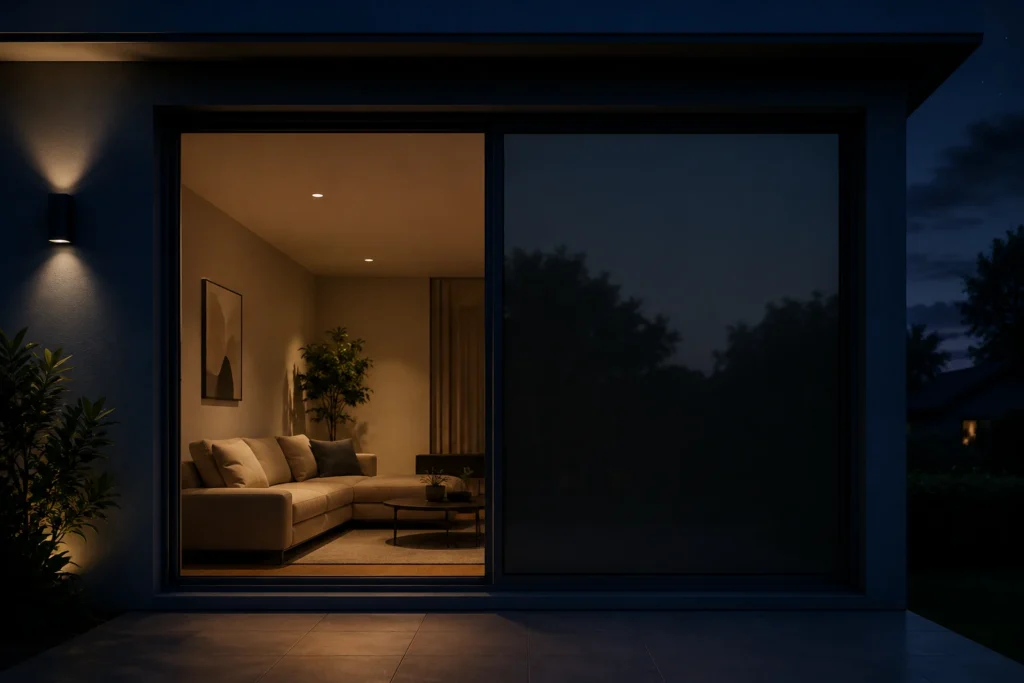
Many homeowners and drivers in Anaheim and Costa Mesa assume that window film works the same way day and night. However, the reality is quite different. Once your indoor lights are on, the balance of light changes, making interiors more visible through glass, even if you have reflective or tinted film. This can be a major concern for street-facing homes, apartments, offices, and vehicles where privacy is important.
At OC Tint Solutions, we help clients choose the right window film for real nighttime privacy. This guide explains which types of film actually maintain privacy after dark, how interior and exterior lighting impacts visibility, and what combinations of solutions provide reliable protection for your home, office, or vehicle.
How Window Privacy Actually Works at Night
Visible Light Transmission (VLT) is a key measurement for any window film. It defines how much light passes through the glass. Films with high VLT allow more light in and out, which is great for daytime visibility but makes nighttime privacy weaker. Conversely, films with low VLT block more light, offering greater privacy, but they may reduce clarity from inside or reduce natural light.
| Film Type | Typical VLT | Daytime Privacy | Nighttime Privacy | Recommended Use |
| Reflective / One-Way | 35–50% | Strong | Weak | Street-facing windows, offices |
| Ceramic | 35–50% | Good | Moderate | Homes, offices, cars |
| Frosted / Matte | N/A | Full | Full | Bathrooms, private rooms |
| Blackout | 0–5% | Full | Full | Bedrooms, media rooms |
Understanding VLT helps you pick the film that balances daytime view and night privacy. At OC Tint Solutions, we measure VLT and test lighting conditions to recommend the ideal film for your property.
Light Balance Principle
Privacy through window film depends on which side is brighter. During the day, exterior sunlight is stronger than indoor lighting, so reflective films appear like mirrors from the outside, providing privacy. At night, the situation reverses: interior lights become brighter than the dark outdoors. This reversal makes reflective or one-way films transparent from the outside, exposing interiors.
In Anaheim and Costa Mesa, homes often have street lighting or neighboring buildings nearby, which can affect the light balance further. Proper film selection, combined with interior lighting control, ensures consistent privacy for both daytime and nighttime conditions.
Interior Lighting Spill Effect
Interior lights do more than brighten a room, they reflect and scatter through glass, reducing nighttime privacy. Even films designed to partially obscure vision can fail if lights are too bright or poorly positioned. For instance, ceiling lights directly above living room windows can create a strong glare that undermines reflective films. We advise clients on optimal lighting adjustments, including dimmers or indirect lighting, to complement the window film and maintain privacy without sacrificing comfort or brightness.
Human Vision in Low Light
The human eye adapts in low-light conditions. When interior lights are on, even lightly tinted windows can appear transparent to people outside. This effect is compounded in apartments or commercial spaces with larger glass surfaces. Films like frosted, decorative, or blackout do not rely on reflection and maintain consistent privacy, making them the most reliable solutions for night visibility concerns.
Why Window Film Alone May Not Be Enough at Night
No reflective or one-way film guarantees privacy after dark. For reliable night privacy, you usually need a film that obscures views physically, such as frosted, decorative, or opaque film. Reflective films work well in daylight but fail indoors at night. Ceramic films balance visibility and glare, while frosted and blackout films provide 24/7 privacy. Combining films with curtains, blinds, or smart glass often gives the most reliable results. We offer local clients in Anaheim and Costa Mesa tailored film solutions that consider your interior lighting, window placement, and specific privacy needs.
Types of Window Film for Nighttime Privacy
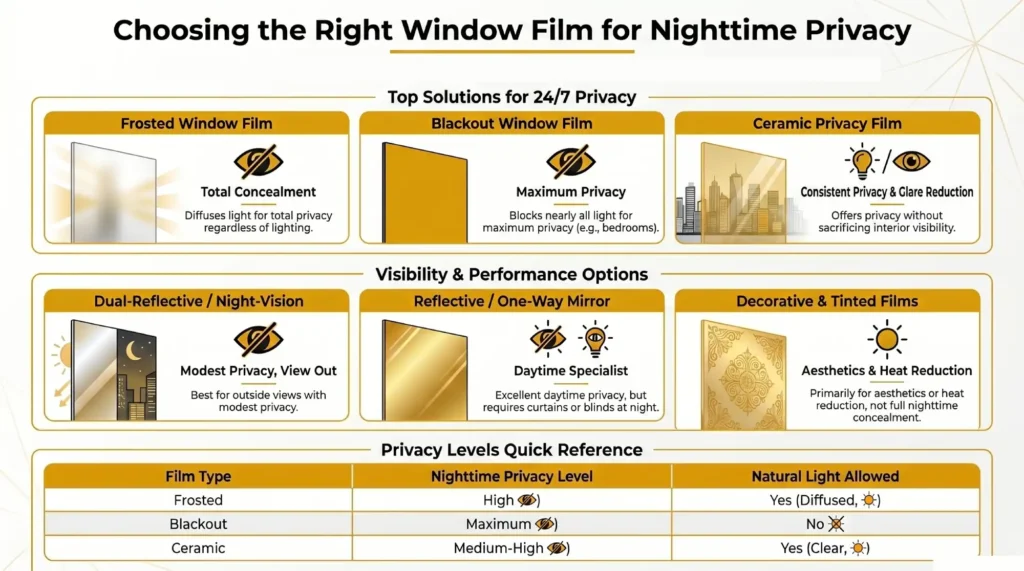
Choosing the right window film for nighttime privacy depends on what you want to achieve, whether it’s full concealment, balanced visibility, glare reduction, or a combination. Each type of film behaves differently after dark, so understanding their properties is key to making the right decision for your home, office, or vehicle.
Ceramic Privacy Window Film (Best Balanced Option)
Ceramic privacy film is an excellent choice for anyone who wants consistent privacy without sacrificing interior visibility. Unlike reflective films, ceramic films do not rely on the difference in light between the interior and exterior. This makes them more reliable at night while still allowing clear visibility from inside. Ceramic films also reduce glare from streetlights or vehicle headlights and provide strong UV protection and heat rejection. In Anaheim, where sunlight is intense and evenings can be bright due to city lighting, ceramic film offers balanced privacy and comfort. This makes it ideal for living rooms, home offices, or vehicles that need a combination of privacy, visibility, and glare control.
Frosted Window Film (True 24/7 Privacy Solution)
Frosted window film works by diffusing light, which prevents anyone outside from seeing into the room, regardless of whether it is day or night. Unlike reflective films, frosted films maintain their effectiveness even when indoor lights are on, making them the most reliable choice for nighttime privacy. Frosted films are perfect for areas that require full-time concealment, such as bathrooms, home offices, or private meeting rooms. In Costa Mesa and Anaheim homes, frosted film is especially effective for street-facing windows where pedestrians or neighbors might otherwise be able to see inside. It allows natural light to enter while keeping your interior completely private.
Blackout Window Film (Maximum Privacy Level)
Blackout films offer the ultimate level of privacy by blocking nearly all light transmission through the window. They prevent anyone from seeing inside at any time, making them the preferred choice for bedrooms, media rooms, or storage spaces where privacy is critical. The trade-off is that blackout films also eliminate natural daylight, so they are not suitable for living spaces where light is desired. In Anaheim homes facing busy streets or commercial lighting, blackout films provide unmatched protection against unwanted visibility at night.
Reflective / One-Way Mirror Window Film
Reflective films, also known as one-way mirror films, rely on external brightness to create a mirror effect during the day. While this provides strong daytime privacy, the effect diminishes at night once indoor lighting becomes stronger than the outdoor environment. As a result, these films offer limited nighttime privacy unless combined with other measures, such as blinds or curtains. They are most effective for commercial buildings or daytime-focused applications where privacy during daylight hours is more critical than nighttime concealment.
Dual-Reflective / Night-Vision Film
Dual-reflective or night-vision films are designed to reduce glare and improve comfort indoors, and they offer some privacy improvement at night. However, they do not fully block visibility. These films are ideal for homes where residents want to enjoy the outside view while still minimizing direct visibility from the street. For high-traffic neighborhoods in Anaheim, dual-reflective films provide a compromise between comfort, daylight use, and modest nighttime privacy.
Tinted or Solar Film
Tinted films primarily reduce light and heat rather than providing true privacy at night. They are often used as a budget-friendly option or as a base layer for less-exposed windows. While they can help reduce visibility slightly, they do not prevent others from seeing inside once lights are on, making them suitable only for areas where full concealment is not required.
Decorative & Patterned Films
Decorative and patterned window films combine functionality with aesthetics, using textures, patterns, or gradients to partially obscure visibility. While they improve privacy to some extent, they are most effective when paired with curtains or blinds at night. These films are excellent for residential spaces where design is a consideration, such as kitchen glass doors, living room partitions, or office panels in Anaheim and Costa Mesa.
Nighttime Privacy by Use Case
The type of window film you choose also depends on the property and its intended use. Here are recommendations tailored for different applications:
Automotive Privacy (Cars, SUVs, Trucks)
In California, vehicle window tinting is regulated by law to ensure driver visibility and safety. Front side windows must use clear, colorless, transparent materials that meet minimum light transmission standards, typically allowing at least 70–88% of visible light to pass through, depending on the specific window and local code. Rear and back windows have more flexibility, but even then, choosing a darker film requires compliance with the law. For practical privacy, many drivers use ceramic or high-quality solar films on rear and side windows to reduce glare, limit visibility of passengers or valuables, and improve heat rejection. Always verify that your chosen film meets California Vehicle Code §26708 requirements before installation, and consider professional consultation to balance privacy, visibility, and legal compliance.
Residential Privacy (Homes & Apartments)
In residential settings, nighttime privacy is heavily influenced by interior lighting and window placement. Frosted films are recommended for bathrooms and street-facing windows to achieve full-time privacy. Ceramic films work well in living areas or home offices to reduce glare while providing moderate privacy. Curtains or blinds are often necessary to achieve complete night coverage, especially in rooms with large glass panes. For homes in Costa Mesa, a combination of frosted and ceramic films is particularly effective for balancing privacy, daylight, and interior visibility. Our residential window tints significantly reduce the amount of solar heat entering your home,
Commercial Privacy (Offices & Retail Spaces)
Commercial buildings require a balance between branding, visibility, and privacy. Reflective films are ideal for exterior-facing glass, allowing businesses to maintain a professional appearance while reducing daytime exposure. Frosted films are best for meeting rooms or private offices where confidential discussions occur. Ceramic films help interior spaces remain comfortable by reducing glare while preserving visibility. In Anaheim commercial areas, combining different film types provides the right mix of privacy, comfort, and daylight management. At OC Tint Solutions, we provide top-tier commercial window tinting services designed to enhance your business’s comfort, privacy, and energy efficiency.
Enhance privacy, reduce glare, and improve comfort with professional window films.
Book Free ConsultationLayered Solutions: When Film Alone Is Not Enough
While certain films, like frosted or blackout, provide full privacy, most reflective or ceramic films alone cannot guarantee complete nighttime privacy. Combining films with other measures often produces the best results. Reducing indoor light intensity is the simplest strategy; dimmers, lamps with adjustable brightness, or strategically placed lighting can significantly enhance the effectiveness of your window film. Pairing film with curtains or blinds ensures full coverage, especially for large street-facing windows. In Anaheim and Costa Mesa homes, layered solutions are particularly effective for living rooms, bedrooms, and home offices that face busy streets or well-lit commercial areas.
Multi-layer approaches also allow homeowners and businesses to balance privacy with natural light. For example, applying a frosted or decorative film while using ceramic film in common areas can maintain visibility from inside while obscuring interiors from outside. Smart or switchable films offer premium flexibility, allowing users to change privacy levels on demand without relying on physical coverings. At OC Tint Solutions, we guide local clients on the best combination of films and lighting strategies to achieve consistent night privacy tailored to each property.
Specifications That Matter When Choosing Privacy Film
When selecting window film, understanding key specifications ensures you get the results you need. Visible Light Transmission (VLT) indicates how much light passes through the glass. Low VLT provides stronger privacy but can reduce natural light inside, whereas higher VLT maintains brightness but offers less concealment at night.
Interior and exterior reflectance also affect privacy. Films that reflect more light outward will work better during the day, but may fail at night if interior lighting is brighter. Opacity is another consideration: obscure, translucent, and opaque films each provide different levels of night concealment. Additional factors include UV rejection, glare reduction, and solar heat control, which improve comfort while maintaining privacy. Adhesive type, static cling versus permanent adhesive, affects removability and installation flexibility, particularly for renters. Finally, installation quality, glass compatibility, and manufacturer warranties play a role in the long-term performance and reliability of your window film.
Common Myths About Nighttime Privacy Window Film
There are several misconceptions homeowners and drivers often have about window films. Many believe that a one-way reflective film will provide 24/7 privacy, but in reality, it only works when the outside is brighter than the inside. Another common myth is that darker films always guarantee better night privacy. While darker films reduce visible light, they do not prevent visibility from brighter interior spaces. Frosted window film is sometimes assumed to perform the same as frosted glass, but film is applied after installation and can be combined with other films for added privacy. Finally, not all films marketed as “night privacy” will meet real-world expectations; interior lighting, window placement, and environmental factors all influence actual performance. Understanding these myths helps homeowners in Anaheim and Costa Mesa make informed decisions.
Professional Installation Benefits
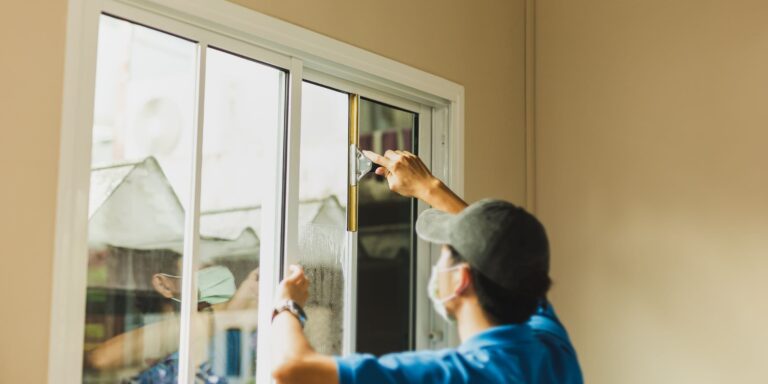
Proper installation is critical for maximizing privacy, light diffusion, and long-term durability. Poor installation can create gaps, bubbles, or uneven adhesion that compromise privacy. OC Tint Solutions provides professional services for automotive, residential, and commercial applications, ensuring that each film performs as intended.
Our team offers:
- Automotive window tinting for cars, SUVs, and trucks.
- Residential privacy solutions, including frosted, ceramic, reflective, and blackout films.
- Commercial installations for offices, meeting rooms, and retail spaces.
- Custom VLT consultation based on local lighting conditions in Anaheim & Costa Mesa.
We measure and test lighting, advise on layered solutions, and ensure a clean, long-lasting finish. Professional installation ensures your investment delivers both daytime performance and nighttime privacy.
Frequently Asked Questions
Does privacy window film work at night?
Yes, but effectiveness depends on interior lighting and film type. Frosted and blackout films provide the most reliable nighttime privacy, while reflective films work primarily during daylight hours.
Why does one-way window film fail at night?
The mirror effect depends on external brightness. Once indoor lights are brighter than the outdoors, the film no longer blocks visibility effectively.
What is the best film for full night privacy?
Frosted or blackout films are the most reliable for complete privacy day and night.
Can curtains improve window film privacy?
Yes, pairing curtains or blinds with window film enhances privacy and ensures full coverage during nighttime hours.
Is ceramic film good for night privacy?
Ceramic film provides balanced visibility and glare reduction, but does not fully block interior views.
Final Takeaway
Nighttime privacy is not solely determined by film darkness. It depends on light control, film type, and installation quality. For residents and businesses in Anaheim and Costa Mesa:
- Frosted film offers full 24/7 privacy.
- Blackout film provides maximum concealment.
- Ceramic film balances visibility and glare control.
- Reflective film works for daytime-only privacy.
- Smart/switchable films allow changeable, premium privacy.
At OC Tint Solutions, we help clients evaluate their lighting environment, window placement, and daily needs to recommend solutions that provide reliable privacy, comfort, and natural light retention. Whether for homes, cars, or offices, our professional installation ensures your window film performs exactly as intended.