Many ceramic coatings fail early because the surface underneath was not prepared the right way. In Anaheim and Costa Mesa, we often see vehicles with swirl marks, dust buildup, and water spots sealed under coating, which makes the finish look dull instead of glossy. Ceramic coating does not correct paint defects. If swirl marks, haze, or water spots remain before application, they can stay visible under the coating until that area is corrected and re-coated
At OC Tint Solutions, we focus heavily on surface preparation before applying any ceramic coating. In Orange County, cars deal with strong sunlight, freeway dust, and coastal moisture, which makes proper prep even more important for long-term protection and shine.
Why Ceramic Coating Prep Matters for Long-Term Results
Ceramic coating needs a completely clean and smooth surface to bond properly with the clear coat. If the surface still has dirt, oxidation, or embedded contaminants, the coating will sit on top of those layers instead of bonding directly to the paint. This weakens durability and reduces water-repelling performance.
In Orange County, environmental conditions speed up paint contamination. Constant UV exposure in Anaheim causes paint to oxidize faster, while Costa Mesa’s coastal air introduces salt particles that stick to the surface. Freeway driving also adds brake dust and road film that cannot be removed with a normal wash. If all of this is not removed before coating, the final result will not last as expected.
Pre-Inspection Before Ceramic Coating Application
Before any cleaning or correction begins, we inspect the vehicle carefully under bright lighting. This step helps us understand the real condition of the paint and decide how much preparation is needed. During inspection, we look for swirl marks, scratches, water spots, and oxidation on each panel individually. Many defects are not visible in normal daylight, so we use LED lighting to reveal surface imperfections clearly. This gives a complete picture of the paint condition.
Once inspection is complete, we decide whether the vehicle needs only light polishing or full paint correction. This step is important because ceramic coating will seal whatever condition the paint is in, so we make sure nothing unwanted is left under the coating layer.
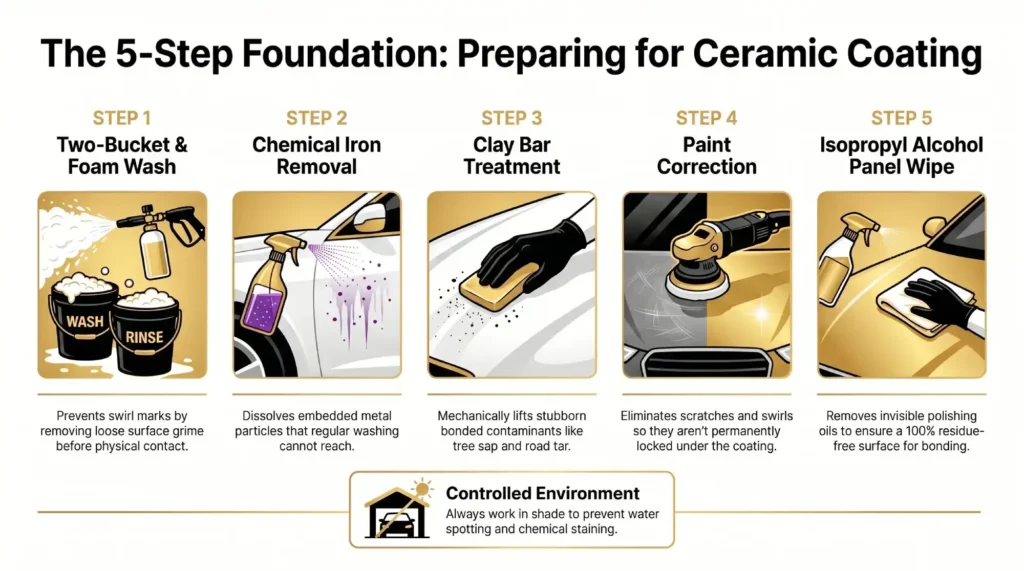
Step 1: Deep Exterior Decontamination Wash
A proper wash is the foundation of ceramic coating preparation because it removes all loose contamination sitting on the paint surface. In Orange County driving conditions, vehicles collect dust, oil film from traffic, pollen, and road grime every day. If this layer is not fully removed, it blocks proper bonding between the ceramic coating and the clear coat. A clean surface ensures the coating can attach evenly and perform well for long-term protection.
Two-Bucket Wash Method
The two-bucket wash method is used to reduce the risk of swirl marks during washing. One bucket contains clean car shampoo solution, while the second bucket contains plain water for rinsing the wash mitt. After cleaning each panel, the mitt is rinsed in the water bucket before dipping it back into the soap bucket. This prevents dirt particles from being dragged across the paint again, which helps protect the surface from micro-scratches.
Foam Pre-Wash Technique
Foam pre-wash is applied before physical contact with the paint. It helps loosen surface grime, dust, and light contaminants without rubbing the paint. The foam breaks down dirt layers so that when the hand wash begins, the risk of scratching is significantly reduced. This step is especially useful in Anaheim and Costa Mesa, where freeway dust and heat-baked dirt are common.
Rinseless Wash Option (When Applicable)
A rinseless wash is used in controlled detailing environments where water access is limited or when working indoors. It involves specially formulated solutions that lift dirt safely from the surface without full rinsing. However, this method requires careful technique because improper use can leave residue or cause light marks on sensitive paint surfaces.
Best Car Shampoo for Ceramic Prep
A pH-neutral shampoo is always used for ceramic coating preparation because it cleans without damaging the clear coat or leaving behind protective wax layers. Wax-based or gloss-enhancing shampoos are avoided because they leave residues that block ceramic bonding. A clean, residue-free surface is necessary for strong coating adhesion.
Pro Tip: Avoid Direct Sunlight During Washing
Direct sunlight causes water and soap to dry too quickly on the paint surface. In the California heat, this leads to water spotting and uneven drying, which affects surface quality before coating. Washing in shade or a controlled environment ensures even cleaning and prevents unnecessary marks on the paint.
Step 2: Iron Fallout & Surface Contamination Removal
Industrial fallout refers to microscopic metal particles that settle on the paint surface over time. These come mainly from brake dust, rail transport systems, and freeway traffic exposure. In areas like Orange County, constant commuting increases this buildup, which becomes embedded into the clear coat and cannot be removed through normal washing.
Iron Remover Application Process
An iron remover is sprayed evenly across the vehicle surface to chemically break down embedded metal particles. As it reacts, it often changes color (commonly turning purple), which indicates contamination is being dissolved. After allowing it to work for a short dwell time, the surface is rinsed thoroughly to remove all residue and loosened particles.
Why This Step Improves Ceramic Bonding
Iron fallout removal is important because it clears hidden contamination that blocks direct contact between ceramic coating and the paint surface. By removing these particles, the coating can bond more evenly, improving durability, gloss, and water-repelling performance over time.
Safety Precautions During Iron Removal
Iron remover products contain strong cleaning agents, so proper handling is required. They should not be inhaled directly, and contact with skin should be avoided. It is also important not to let the product dry on the paint, as this can leave stains or marks on sensitive surfaces.
Pro Tip: Work in Shade or Controlled Environment
Iron removal should always be done in shaded or controlled conditions. Heat from direct sunlight can cause the chemical to dry too quickly, reducing effectiveness and increasing the risk of surface staining.
Step 3: Clay Bar Treatment for Deep Surface Cleaning
Even after washing and iron removal, some contaminants remain bonded to the clear coat. Clay bar treatment physically removes these stubborn particles from the paint surface. This step is essential because ceramic coating requires a completely smooth and clean surface for proper bonding. Clay bar treatment removes contaminants that are deeply stuck to the paint, including tar spots from roads, tree sap residue, industrial dust, and embedded road grime. These particles cannot be removed by washing or chemical treatments alone and must be lifted mechanically.
Lubrication Process (Detail Spray Use)
During claying, a lubricant spray is applied to the surface to prevent friction between the clay bar and paint. The clay is moved gently across the surface in straight motions, allowing it to pick up contaminants safely without scratching the clear coat.
How to Check If Clay Step Is Complete
The surface is checked using a simple touch test. When the paint feels smooth like glass with no rough texture, it means the clay process is complete. If roughness is still felt, additional claying is required before moving to the next step.
Step 4: Paint Correction (Critical for Ceramic Coating Results)
Paint correction is one of the most important steps because ceramic coating locks in whatever condition the paint is in. If swirl marks, scratches, or dull spots are present, they will remain visible under the coating. This is why correction is done before any coating is applied.
Single-Stage vs Multi-Stage Correction
Single-stage correction is used for light defects and focuses on improving gloss and removing minor swirl marks. Multi-stage correction is used for deeper imperfections and involves both cutting and finishing processes to restore clarity and reflection quality in the paint.
Machine Polishing Explained
Machine polishing is done using dual-action polishers that safely refine the clear coat. Compounds are used first to remove deeper defects, followed by finishing polish to refine the surface. This process improves clarity, depth, and smoothness of the paint before coating application.
Expected Results After Correction
After paint correction, the vehicle paint becomes significantly more reflective and smooth. Gloss levels increase, swirl marks are reduced or removed, and the clear coat appears more refined. This creates the ideal surface for ceramic coating to bond properly and deliver long-lasting protection.
Step 5: Surface Degreasing (Panel Wipe Stage)
Panel wipe solution is a specially formulated cleaner, usually based on isopropyl alcohol or similar solvents, used to remove all remaining polishing oils, residues, and light contaminants left on the paint after correction. Even after machine polishing, the surface can still carry invisible oils from compounds and finishing products. These residues are not visible, but they create a barrier between the ceramic coating and the clear coat. A proper panel wipe ensures the paint surface is completely clean, dry, and ready for coating application.
Why This Step Is Mandatory Before Coating
In most coating systems, a panel wipe or equivalent paint cleanser is used after polishing to remove oils and residue before coating. Always follow the specific coating and polish manufacturer’s instructions. If the panel wipe is skipped, the coating may not bond evenly, which can lead to high spots, streaking, or early failure in certain areas. In Orange County conditions, where heat and dust are constant, even small bonding issues can reduce coating durability over time. A properly degreased surface ensures the coating spreads evenly and cures correctly, creating strong protection against UV rays, road grime, and water spots.
Application Method
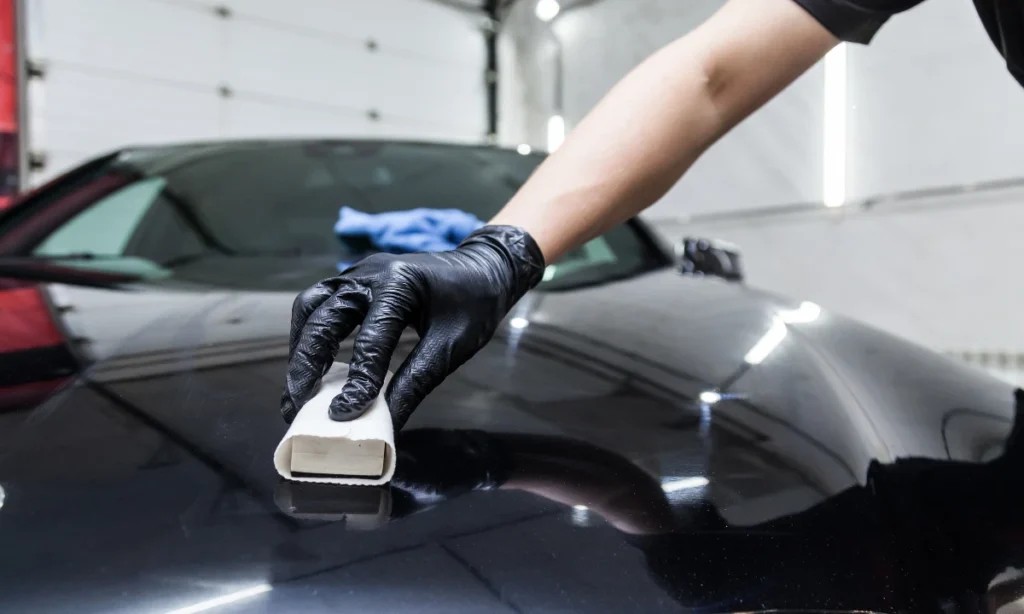
Panel wipe is applied carefully using clean microfiber towels to avoid introducing new contamination to the surface. The process is done one panel at a time, ensuring full coverage and consistency. The solution is wiped across the surface in controlled motions to break down and lift any remaining oils. A second dry microfiber towel is then used to remove any leftover residue, leaving the surface completely clean and ready for ceramic coating application. This step requires patience and attention because even small missed areas can affect the final coating finish.
Environmental Conditions for Ceramic Coating Prep in Orange County
Orange County weather plays a direct role in how well ceramic coating preparation performs. In Anaheim, strong sun exposure can heat up panels very quickly, which causes cleaning products, water, and even panel wipe solutions to dry faster than expected. This creates risks like water spots or uneven cleaning if the process is rushed. In Costa Mesa, coastal air brings in fine salt particles that settle on paint surfaces even after washing, which makes final inspection very important before coating.
Humidity also affects timing during preparation. When moisture levels are higher, surfaces take longer to fully dry, especially after iron removal and clay bar treatment. If any moisture is trapped under the ceramic coating, it can reduce bonding strength and affect long-term durability. Because of these conditions, we always prefer controlled indoor environments or shaded working areas to keep surface conditions stable during prep.
Freeway driving in Orange County also adds another challenge. Vehicles quickly collect a thin layer of road film that is not always visible but still affects bonding. This is why even freshly washed cars still go through full decontamination before ceramic coating application. Laws and regulations about window tints may change with time, which may make it necessary to replace your old tints with newer, compliant ones.
To avo
DIY Prep vs Professional Ceramic Coating Results (Final Comparison)
While DIY preparation can handle basic cleaning, it cannot match the depth and consistency of professional prep work.
DIY prep usually includes:
- Basic wash
- Light drying
- Minimal surface cleaning
However, professional prep includes:
- Full contamination removal
- Iron fallout treatment
- Clay bar decontamination
- Machine paint correction
- Panel wipe degreasing
- Controlled environment application
The difference is not just appearance; it directly affects coating lifespan, hydrophobic strength, and long-term paint protection.
For Orange County drivers, professional preparation reduces the risk of early coating failure and ensures consistent performance across all driving conditions.
Why Choose us for Ceramic Coating in Orange County
At OC Tint Solutions, we provide comprehensive ceramic coating preparation and application services tailored to local driving conditions in Anaheim and Costa Mesa.
Our process focuses on full surface preparation before coating, ensuring each vehicle receives proper:
- Paint inspection and correction
- Decontamination and clay treatment
- Professional panel wipe preparation
- Controlled ceramic coating application
We do not rush the preparation stage because we understand that coating performance depends on the surface underneath. Every vehicle is treated based on its actual paint condition, not a standard shortcut process. This approach helps deliver longer-lasting protection, deeper gloss, and better resistance to Orange County’s sun, dust, and coastal air.
Want ceramic coating done the right way? Let OC Tint Solutions protect your vehicle with professional care.
Book NowFrequently Asked Questions
How do you prepare a car for ceramic coating step by step?
Preparation includes a full wash, iron fallout removal, clay bar treatment, paint correction, and panel wipe. Each step removes dirt, contamination, and defects so the coating can bond properly to the clear coat.
Is paint correction necessary before ceramic coating?
Yes, paint correction is important because ceramic coating seals the paint exactly as it is. If swirl marks or scratches are present, they will stay visible under the coating.
Can ceramic coating be applied without clay bar treatment?
It is not recommended. Clay bar removes bonded contaminants that washing cannot clean, and skipping it can reduce coating adhesion and durability.
How long does ceramic coating prep take?
Prep time varies widely by contamination level, correction needs, and the coating system being used. Vehicles needing full paint correction take longer than those in good condition.
What happens if you skip panel wipe before coating?
Skipping panel wipe leaves polishing oils on the surface, which can block proper bonding. This may cause uneven coating, streaking, or early failure.
Final Thoughts: Proper Prep Decides Ceramic Coating Performance
Ceramic coating success is not based on the product alone. It depends heavily on how well the surface is prepared before application. In a region like Orange County, where environmental conditions are harsh on vehicle paint, proper preparation becomes even more important.
A fully prepped surface ensures stronger bonding, better appearance, and longer protection. Skipping steps like decontamination or paint correction almost always leads to reduced performance and shorter coating life. For drivers in Anaheim and Costa Mesa who want long-term protection and a clean, high-gloss finish, professional ceramic coating preparation is the most reliable choice.