Window tinting is more than just an aesthetic upgrade for your vehicle, home, or office. It provides a range of practical benefits, including protection from harmful UV rays, enhanced privacy, and improved energy efficiency. In sunny California, where the heat can be intense and the sun’s rays harmful, window tinting is especially important. Whether you’re looking to reduce glare while driving, keep your home cooler, or protect your car’s interior from fading, choosing the right type of window tint film is key.
However, with various types of window tint films available in the market, it can be overwhelming to decide which one suits your needs best. We will tell you the most popular options available, helping you make an informed choice.
Types of Window Tint Film
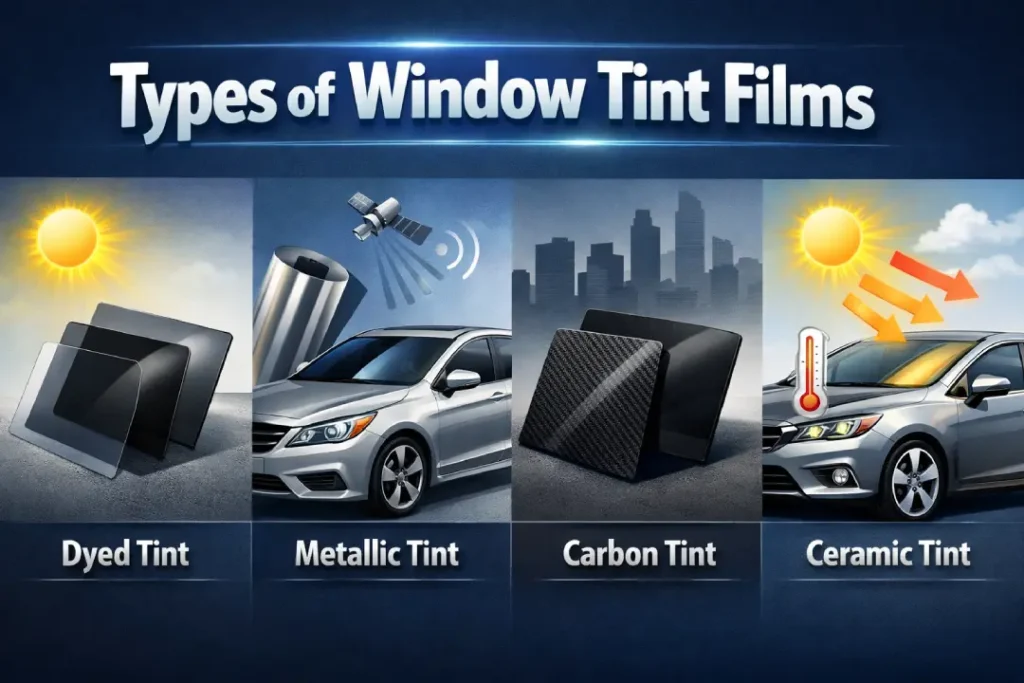
Different types of window tint films are available for your vehicle, home, or office. Each type has unique properties, making it important to select the one that best fits your needs and budget.
Dyed Window Tint: Affordable and Customizable
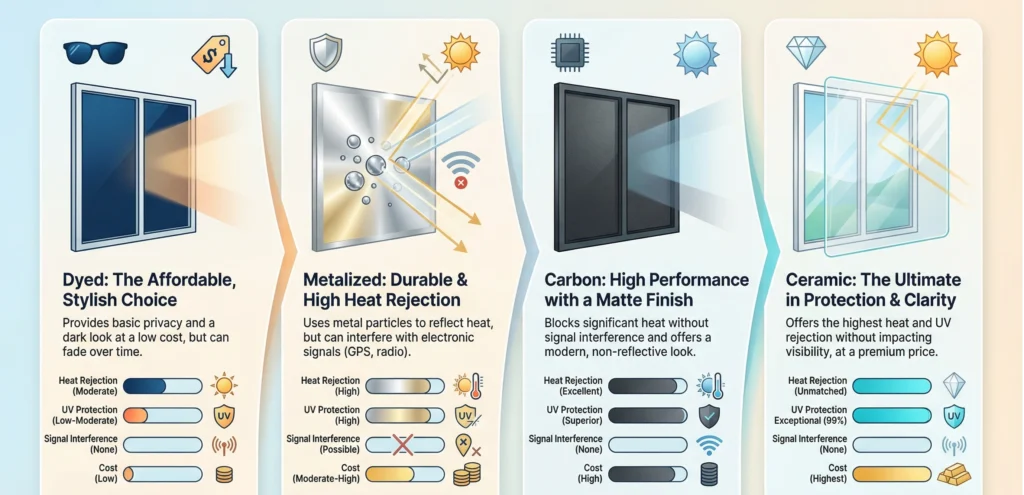
Dyed window tint is one of the most common and affordable options available. It works by adding a layer of dye between the window and a protective film. The dye absorbs heat, which helps in reducing the temperature inside the vehicle or building.
Advantages of Dyed Window Tint
- Affordability: Dyed tint is one of the most budget-friendly options.
- Aesthetic Appeal: Offers a sleek, dark look without much reflectivity.
- Privacy: Provides a solid level of privacy due to its darkened appearance.
Disadvantages of Dyed Window Tint
- Heat Rejection: While it helps absorb heat, it doesn’t perform as well as higher-end options like ceramic or carbon tint.
- Fading: Over time, dyed tint may fade or discolor, especially under intense sun exposure.
- Limited UV Protection: Compared to ceramic or metalized tints, dyed tints provide less UV protection.
Best Applications
- Cars: Ideal for drivers looking for a basic tint with privacy and style at a low price.
- Homes: Suitable for areas where you need basic privacy but don’t need heavy heat rejection.
Metalized Window Tint: Durability and Reflective Benefits
Metalized window tint uses metallic particles embedded in the film to reflect UV rays and heat. This type of tint is more durable than dyed tint and provides better heat rejection.
Advantages of Metalized Window Tint
- Durability: Metalized tint is highly durable and resistant to scratches.
- Superior Heat Rejection: Reflects heat away from the windows, making it ideal for hotter climates.
- UV Protection: Offers better UV protection than dyed window tint, reducing skin damage and fading of your vehicle’s interior.
Disadvantages of Metalized Window Tint
- Signal Interference: The metal particles in the film can interfere with signals like GPS, radio, and cell phone reception.
- Reflective Appearance: While this can be an aesthetic advantage, some people may find the reflective nature of the tint undesirable.
Best Uses for Metalized Window Tint
- Commercial Buildings: Metalized tint is perfect for offices or commercial spaces that need enhanced heat rejection and durability.
- Vehicles: Ideal for those seeking a durable, high-performance film with minimal concerns about signal interference.
Dyed Window Tint vs. Metalized Window Tint
| Film Type | Heat Rejection | UV Protection | Signal Clarity | Appearance |
| Dyed | 20-30% | Moderate | 100% | Classic Dark |
| Metalized | 40-50% | High | Interference | Reflective/Shiny |
| Carbon | 50-60% | High | 100% | Matte Black |
| Ceramic | 70-90% | Exceptional | 100% | Ultra-Clear |
| Graphene | 80-95% | Exceptional | 100% | Deep Gloss |
Hybrid Window Tint: The Best of Both Worlds
Hybrid window tint is a combination of dyed and metalized films. It blends the benefits of both, offering heat rejection, UV protection, and a sleek appearance without the drawbacks of metalized films.
Advantages of Hybrid Window Tint
- Heat Rejection and Durability: Combines the heat rejection of metalized tint with the aesthetic appeal of dyed film.
- No Signal Interference: Unlike metalized tint, hybrid films do not interfere with signals.
- Privacy and UV Protection: Offers a good balance of privacy and UV protection.
Best Applications for Hybrid Window Tint
- Cars: Ideal for drivers seeking a balance of performance, aesthetics, and privacy, with minimal signal interference.
- Homes and Offices: Suitable for properties that require privacy, heat reduction, and UV protection.
Carbon Window Tint: Superior Heat Reduction and Aesthetic Appeal
Carbon window tint is one of the top choices for those seeking a high-performance film that offers excellent heat rejection, UV protection, and a sophisticated matte finish. Unlike metalized films, carbon tint does not rely on metallic particles, making it an excellent choice for users who want advanced performance without the drawbacks of signal interference.
How Carbon Window Tint Works
Carbon window tint uses carbon particles in the film to block heat. These particles also give the tint its distinctive matte finish, which is highly sought after for its modern look. Unlike dyed or metalized films, carbon tint does not fade over time, ensuring that your car or home windows maintain their appearance for years.
Advantages of Carbon Window Tint
- Excellent Heat Rejection: Carbon tint can block up to 50% of solar heat, making it ideal for hot climates like California.
- Superior UV Protection: Blocks harmful UV rays, protecting both your skin and the interior of your vehicle or home.
- Aesthetic Appeal: The matte finish gives your windows a sleek, non-reflective look that many homeowners and car owners prefer.
- No Signal Interference: Unlike metalized films, carbon tint does not interfere with radio, GPS, or cell signals.
- Durability: It is resistant to fading and won’t degrade over time like dyed films.
Disadvantages of Carbon Window Tint
- Higher Cost: Carbon tint tends to be more expensive than dyed or metalized films, making it a pricier option.
- Limited Availability: Not all installers offer carbon tint, and it may require more research to find the right provider.
Best Applications for Carbon Window Tint
- Vehicles: Ideal for drivers seeking a high-performance tint that offers both privacy and protection without compromising style.
- Homes: Great for homeowners who want an elegant matte finish along with energy savings and UV protection.
Ceramic Window Tint: Ultimate Protection and Clarity
Ceramic window tint represents the pinnacle of window film technology. Made using nano-ceramic particles, this type of tint offers the best in heat rejection, UV protection, and clarity without the negative effects associated with other types of window tint films.
How Ceramic Window Tint Works
Ceramic window tint uses ceramic particles, which are significantly more effective than metal or carbon particles in blocking infrared light (heat). The nano-ceramic construction helps maintain high visibility while blocking out significant amounts of heat, UV rays, and glare. Unlike other tints, ceramic film does not darken windows excessively, preserving clarity. The IWFA is the leading nonprofit trade body for the window film industry.
Advantages of Ceramic Window Tint
- Unmatched Heat Rejection: Ceramic tint blocks up to 60% of heat, keeping interiors cool and comfortable.
- Exceptional UV Protection: Provides up to 99% protection from harmful UV rays, reducing the risk of skin damage and protecting your vehicle’s interior from fading.
- Clarity: Ceramic film does not affect visibility, maintaining a clear, crisp view.
- No Signal Interference: The absence of metal particles ensures there is no interference with radio, GPS, or other signals.’
- Durability: Ceramic window tint is highly durable, resisting fading, bubbling, and cracking over time.
- Energy Efficiency: Helps keep homes and vehicles cooler, reducing the need for air conditioning and saving on energy costs.
Disadvantages of Ceramic Window Tint
- Cost: Ceramic tint is one of the most expensive options available due to its superior performance and advanced technology.
- Installation: Requires professional installation, like OC Tint Solutions to ensure it’s done correctly.
Best Applications for Ceramic Window Tint
- Vehicles: Perfect for high-end vehicles where performance and aesthetics are equally important. It offers the best heat rejection, UV protection, and clarity.
- Homes and Commercial Spaces: Ideal for properties in hot climates that require maximum heat rejection and UV protection, while maintaining a clear view.
Ceramic Window Tint vs. Other Types of Window Tint
| Feature | Dyed Window Tint | Metalized Window Tint | Hybrid Window Tint | Carbon Window Tint | Ceramic Window Tint |
| Heat Rejection | Moderate | High | High | Excellent | Superior |
| UV Protection | Low to Moderate | High | High | High | Exceptional |
| Clarity | Good | Fair | Good | Excellent | Excellent |
| Signal Interference | None | Yes | None | None | None |
| Durability | Low | High | High | High | Very High |
| Cost | Low | Moderate | Moderate | High | Very High |
Other Window Tint Options: Exploring Emerging Technologies
While the types of window tint mentioned above are the most common, there are several emerging technologies that are pushing the boundaries of what’s possible with window film.
Smart Tint Films
Smart tint films represent a modern innovation in window tinting, offering the ability to change from clear to dark at the push of a button. These films are commonly used in commercial buildings and high-end vehicles, providing users with dynamic control over both privacy and light transmission. The ability to adjust the tint level based on personal preferences or environmental conditions offers convenience and flexibility. Additionally, smart tint films can help reduce cooling costs by adjusting the light transmission based on the time of day or weather conditions.
However, one of the main drawbacks is the cost, as this technology is still relatively expensive, making it less accessible for some users. Moreover, the limited availability of installers who offer smart tinting and the need for specialized expertise for installation can make it a less practical choice for some.
Graphene Window Tint
Graphene window tint utilizes graphene-enhanced films, which significantly outperform traditional films in terms of heat rejection and durability. This emerging technology is quickly gaining attention in the window tinting industry due to its superior heat-blocking properties and long-lasting durability. Graphene window tint is known for offering excellent heat rejection, even surpassing ceramic tints, making it an ideal option for those looking to reduce heat inside a building or vehicle.
Furthermore, graphene’s durability ensures that the tint lasts longer and resists fading over time, providing value for the investment. However, like smart tint films, graphene window tint is still relatively new to the market and comes at a premium price, making it less affordable for some consumers.
Reflective Window Tint
Reflective window tint films are designed with a shiny, mirror-like finish that reflects a substantial amount of sunlight. These films are particularly popular in commercial and residential Tinting, where the primary benefit is excellent heat rejection. The reflective surface blocks a high percentage of solar heat, helping to maintain cooler interior temperatures. Additionally, the mirrored finish provides an added level of privacy, especially during the day, by making it harder to see inside the building or vehicle.
On the downside, some people find the reflective appearance too bold or unattractive, especially for personal vehicles. Another disadvantage is that reflective films can impair visibility at night, as the mirrored surface reduces the ability to see through the tint when light conditions change.
How to Choose the Right Window Tint for Your Needs
Selecting the right window tint for your car, home, or office involves several factors, including performance, aesthetic preferences, and legal requirements. Here’s a summary of key considerations to help you make the best choice:
Factors to Consider
- Climate: If you live in a hot climate like California, you’ll want a film that provides superior heat rejection. Ceramic and carbon tints are great choices for high heat resistance.
- Privacy: If privacy is a priority, darker tints like dyed or metalized films are ideal. Ceramic tints also offer privacy without darkening the windows excessively.
- Aesthetic Preferences: The look of your window tint matters. Carbon tints offer a sleek matte finish, while ceramic tints maintain clarity and a clean appearance.
- Legal Compliance: Make sure the tint you choose complies with local tinting laws. In California, the law restricts how dark the tint can be, especially for the front windows and windshield.
Benefits of Window Tinting: Protection, Privacy, and Style
Before diving into the specifics of each window tint type, let’s first explore why window tinting is a smart investment for your car, home, or commercial space.
1. UV Protection and Heat Rejection
One of the primary reasons people opt for window tinting is to block harmful ultraviolet (UV) rays. Prolonged exposure to UV rays can cause skin damage and accelerate the aging of your vehicle’s interior. Window tint helps block up to 99% of UV rays, keeping you and your family safe. Additionally, window tint can reduce heat buildup inside your vehicle or home, leading to a more comfortable environment.
2. Privacy and Security
Tinted windows provide added privacy by preventing outsiders from easily seeing inside. This is especially beneficial for both cars and homes, where privacy is often a priority. Tinted windows can also provide an extra layer of security, making it harder for potential thieves to see valuables inside your vehicle.
3. Aesthetic Appeal
Window tinting enhances the overall appearance of your vehicle or property. A sleek, dark tint on car windows gives your vehicle a modern, stylish look. For homes and commercial spaces, window film can complement the building’s design and offer a polished, uniform look.
4. Energy Efficiency
Window tinting also improves energy efficiency by reducing the need for air conditioning. In hot climates like California, tinted windows keep your indoor spaces cooler, reducing your reliance on AC and helping you save on energy bills.
5. Legal Compliance
California has specific laws regarding window tinting, including restrictions on how dark your tint can be, particularly for the front windshield and side windows. Choosing the right tint ensures that you stay within legal limits and avoid fines.
FAQs About Window Tint Films
Does window tint block heat?
Yes, window tint is designed to block heat by reducing the amount of infrared radiation that passes through the windows. High-quality tints like ceramic and carbon can block a significant amount of heat, helping to keep your vehicle or home cooler.
How long does window tint last?
The lifespan of window tint depends on the type of film and how well it is maintained. On average, window tint can last anywhere from 5 to 10 years, but factors like exposure to sunlight, temperature changes, and maintenance will affect its durability.
Can I get fined for illegal tint?
Yes, if your tint does not comply with local laws, you could face fines. California has specific regulations regarding window tinting, including limits on the darkness of the tint for front and side windows. Always check local tint laws to ensure compliance.
Is ceramic tint worth the cost?
Ceramic tint is more expensive than other types of tint, but it offers superior heat rejection, UV protection, and clarity. If you’re looking for the best performance and are willing to invest in long-term benefits, ceramic tint is definitely worth the cost.
How do I clean tinted windows?
To clean tinted windows, use a soft microfiber cloth and a mild, ammonia-free cleaner. Avoid harsh chemicals or abrasive scrubbing, as they can damage the film. Be gentle to ensure the tint remains intact and effective.
What Experts Recommend for Pressure Washing Ceramic Coatings
When pressure washing ceramic-coated surfaces, experts recommend using low pressure to avoid damaging the coating. Always use a wide-angle nozzle and pH-balanced detergent to ensure a safe and thorough clean. Additionally, wash when the surface is cool, and rinse thoroughly before applying any cleaning agents.
Selecting the right window tint can improve comfort and protect from UV rays. Ceramic tint is the best choice for heat rejection and UV protection, offering clear visibility and durability. It’s ideal for California residents looking for effective sun protection. For professional installation and expert advice, OC Tint Solutions is here to help. Contact us for a consultation and enjoy the benefits of quality window tinting.