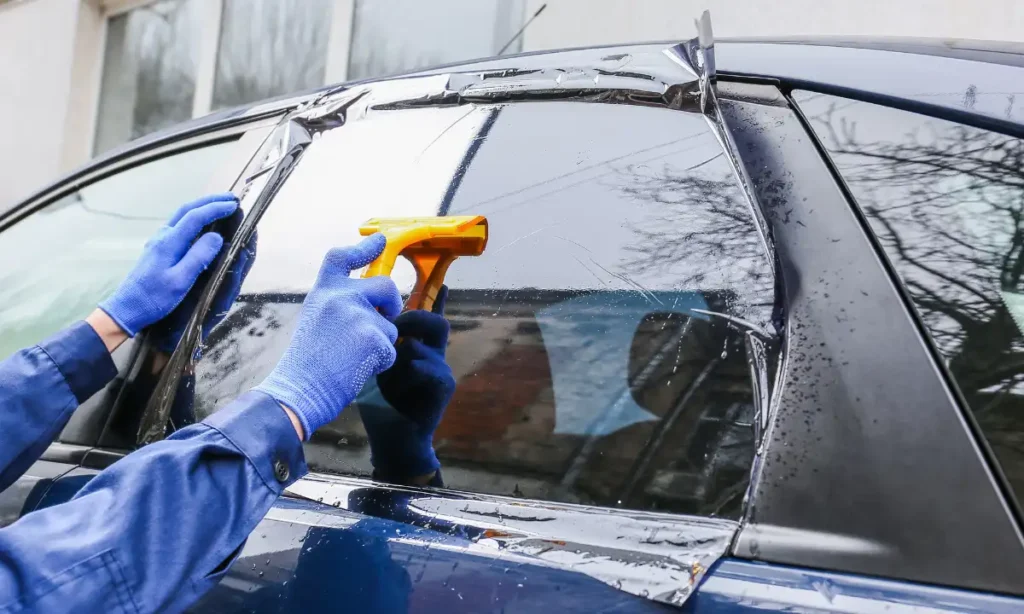
If you drive in Orange County, you know how intense the California sun can be. Hot cabin temperatures, sun glare, fading dashboards, and UV exposure are everyday challenges that can affect your comfort, your car’s interior, and even your safety. Choosing the right window tint can solve all these problems, but with options like ceramic and metallic tint available, how do you pick the best one for your vehicle? In this guide, we’ll break down ceramic tint vs metallic tint, comparing their heat rejection, UV protection, signal interference, visibility, durability, and cost so you can make the smartest choice for your car.
At OC Tint Solutions, we specialize in automotive window tinting across Anaheim, Costa Mesa, and the greater Orange County area. Our team provides professional installation of ceramic, nano ceramic, and metallic films to ensure your vehicle stays cooler, protected, and stylish, all while keeping your electronics working perfectly.
Ceramic Tint vs Metallic Tint: Quick Comparison Table
Before diving into the details, here’s a clear side-by-side comparison. This helps drivers quickly see the differences and benefits of each tint type.
| Feature | Ceramic Window Tint | Metallic Window Tint |
| Material | Ceramic particles / non-metallic nanoparticles | Tiny metal particles |
| Heat Rejection | Very high, especially infrared heat | Moderate, mainly reflective |
| UV Protection | Up to 99% UV rejection | Good, varies by film |
| Signal Interference | None – safe for GPS, cell, radio, Bluetooth | May interfere with GPS, radio, Bluetooth, and cell signals |
| Appearance | Clean, non-reflective, modern | Shiny, reflective, mirror-like |
| Visibility | Crystal-clear day and night | May reduce clarity due to reflectivity |
| Durability | Resistant to fading, scratches, peeling | Can oxidize, fade, or discolor over time |
| Cost | Higher upfront | Lower upfront |
| Ideal For | Modern cars, Teslas, EVs, hot climates | Budget builds, reflective privacy |
This table makes it easier for Orange County drivers to understand which film fits their daily driving needs. If you want a cooler cabin, safer electronics, and long-lasting tint, ceramic is usually the better choice. For those seeking a reflective style at a lower price, metallic remains an option.
How Ceramic and Metallic Window Tint Works
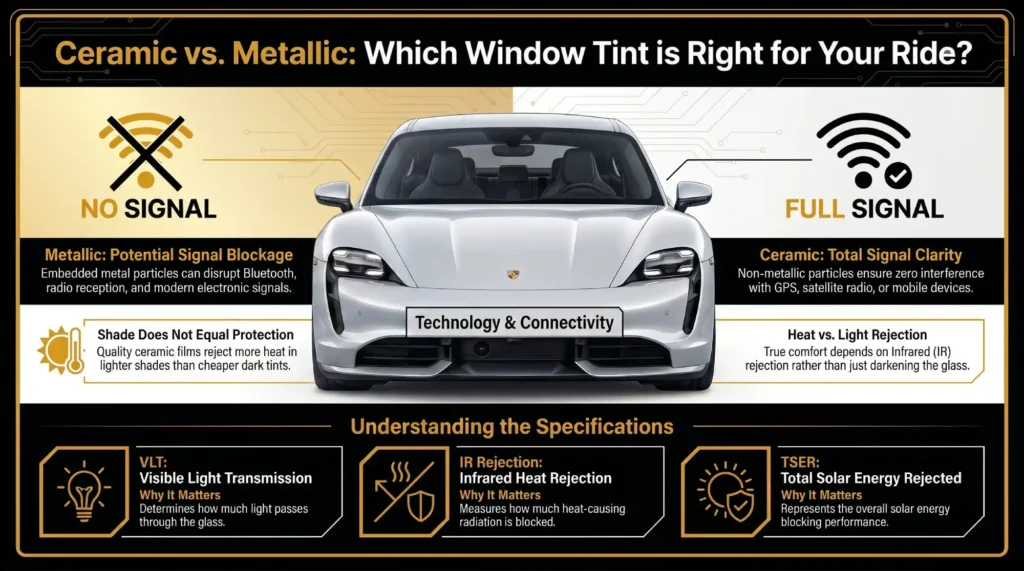
Ceramic Window Tint: Non-Metallic Heat Control
Ceramic window tint uses advanced non-metallic ceramic particles or nano-ceramic technology. These particles block infrared radiation, reduce heat buildup inside the cabin, and protect against UV rays—all without adding metal to your windows. Unlike metallic films, ceramic does not interfere with GPS, satellite radio, or cell phone signals, making it ideal for modern vehicles, including Teslas and EVs.
At OC Tint Solutions, our ceramic and nano ceramic films are installed professionally to provide maximum heat rejection, sun glare reduction, and vehicle interior protection. Each installation ensures the film performs at its peak while maintaining optical clarity and a non-reflective, sleek appearance.
Metallic Window Tint: Reflective Solar Control
Metallic, or metalized, window tint contains tiny metal particles embedded in the film. These particles reflect sunlight and solar energy, helping to reduce heat and glare in the vehicle. While metallic tint can add a reflective or mirror-like appearance, it can interfere with electronics due to its metal content. GPS navigation, mobile devices, Bluetooth, and radio reception may be affected, which can be a concern for drivers relying on modern technology.
For drivers in Orange County who are looking for basic heat control with reflective style, metallic tint can be a cost-effective option. However, for those who prioritize comfort, signal safety, and clarity, ceramic is usually the superior choice.
Heat Rejection: Which Tint Keeps Your Car Cooler?
Heat rejection is one of the biggest reasons drivers compare ceramic tint vs metallic tint. In Orange County, parked cars can heat up quickly, especially when they sit under direct sun for hours. The seats become hot, the steering wheel feels uncomfortable, and the air conditioner has to work harder before the cabin feels normal again. A good window film helps reduce this heat buildup, but ceramic and metallic tint handle heat in different ways.
Ceramic tint usually performs better because it targets infrared radiation, which is a major source of the heat you feel inside your vehicle. It can reduce cabin heat without needing an overly dark shade, which is important for drivers who want comfort but still want clean visibility. Metallic tint also helps with heat reduction, but it works mainly by reflecting sunlight away from the glass. That reflective style can work, but it may come with trade-offs in appearance, signal performance, and long-term look.
A key point many drivers miss is this: darker tint does not always mean better heat rejection. A cheap dark film may look strong, but it may not block infrared heat well. A quality ceramic window film can feel cooler even in a lighter shade because the technology inside the film is better.
| Term | Meaning | Why It Matters |
| VLT | Visible Light Transmission | Shows how much light passes through the tint |
| IR Rejection | Infrared heat rejection | Shows how much heat-causing radiation is blocked |
| TSER | Total Solar Energy Rejected | Shows overall solar energy blocking performance |
| UV Rejection | Ultraviolet ray blocking | Helps protect skin and vehicle interiors |
For daily drivers in Anaheim, Costa Mesa, and nearby Orange County areas, ceramic tint is usually the better comfort choice because it helps reduce heat while keeping the vehicle’s appearance clean and modern.
UV Protection and Interior Protection
UV protection is another major reason car owners invest in window tint. UV rays can slowly damage your vehicle’s interior, especially if your car is parked outside often. Over time, sunlight can fade dashboards, dry out leather, crack vinyl, weaken trim pieces, and make the cabin look older than it really is. For drivers who care about resale value, comfort, and interior condition, UV protection is not a small feature.
Both ceramic and metallic tint can offer UV protection, but ceramic tint is often preferred because it combines UV rejection with better clarity, heat rejection, and signal safety. This makes it a stronger overall option for modern vehicles. High-quality ceramic window tint can block a very high percentage of harmful UV rays, depending on the film brand and series.
This matters even more in Southern California because vehicles are exposed to strong sunlight throughout much of the year. If you drive often, park outside, or have leather seats, ceramic tint can help protect from sun damage while making the ride more comfortable.
For OC Tint Solutions customers, this is where professional film selection matters. The right tint is not just about making windows darker. It is about choosing a film that protects your vehicle’s interior, improves comfort, reduces glare, and matches your daily driving needs.
Signal Interference: The Biggest Difference for Modern Cars
Signal interference is one of the clearest differences between ceramic and metallic window film. Metallic tint contains metal particles. Those particles can sometimes create a Faraday cage effect, which means the metal in the film may reduce or disrupt electronic signals passing through the glass.
This can affect:
- GPS navigation
- Cell phone signal
- Bluetooth connection
- Satellite radio
- Radio reception
- Toll pass devices
- Mobile data
- Some smart vehicle systems
For older vehicles, this may not feel like a major issue. But for newer cars, Teslas, EVs, luxury vehicles, and daily drivers that depend on navigation and connected features, signal safety is important. Most drivers do not want their tint to affect Apple CarPlay, Android Auto, GPS maps, phone calls, or streaming.
Ceramic tint is different because it is metal-free and non-conductive. It does not create the same signal-blocking problem. That makes ceramic tint a better fit for modern vehicles, especially in Orange County where many drivers rely on digital maps, mobile connectivity, parking apps, and toll systems every day.
This is also a reason to choose OC Tint Solutions for ceramic or nano ceramic tint installation. Their automotive tint options are better suited for drivers who want heat rejection and UV protection without risking problems with GPS, phone, Bluetooth, or radio signals.
Visibility, Glare, and Night Driving
Visibility should always be part of the decision when choosing window tint. A tint may look good from the outside, but if it makes driving harder at night or creates too much reflection, it can become frustrating. This is where ceramic tint usually has an advantage. Ceramic tint is known for better optical clarity because it does not rely on metal particles to reflect sunlight. It can reduce sun glare while keeping the view clean from inside the vehicle. This helps during bright daytime driving, especially on highways, near the coast, or during sunset when glare can hit directly through the side windows or windshield area.
Metallic tint can also reduce glare, but its reflective finish may affect how the window looks and how clear the view feels. Some drivers like the shiny look, while others feel it creates a less natural appearance. At night, very dark or highly reflective films can make visibility more difficult, especially in low-light areas.
The most important factor here is VLT percentage. VLT controls how much visible light passes through the glass. A lower VLT means darker tint. For night driving, the goal is to choose a film that reduces glare and heat without making the windows too dark for safe visibility. For most Orange County drivers, a quality ceramic film with the right VLT gives the best balance: reduced glare, strong heat rejection, cleaner visibility, and a premium look.
Appearance and Privacy: Non-Reflective vs Reflective Tint
Appearance is a personal choice, but it also affects how your vehicle looks on the road. Ceramic and metallic tint have very different styles. Ceramic tint gives a clean, smooth, non-reflective look. It usually blends well with modern vehicles, luxury cars, Teslas, SUVs, and daily drivers. The finish looks more natural and premium because it does not create a shiny mirror effect. If you want your vehicle to look sleek without looking overly reflective, ceramic tint is usually the better choice.
Metallic tint has a more reflective appearance. Some drivers like this because it creates extra privacy and gives the windows a mirror-like finish. It can make it harder for people to see into the vehicle during the day, which may help with privacy and security. However, the shiny look may not match every car style, and in some areas, reflectivity can raise legal concerns.
Here is a simple way to decide:
| Preference | Better Choice |
| Clean factory-style appearance | Ceramic tint |
| Reflective privacy | Metallic tint |
| Luxury or Tesla appearance | Ceramic tint |
| Budget-friendly shiny look | Metallic tint |
| Subtle privacy | Ceramic tint |
| Mirror-like finish | Metallic tint |
For OC Tint Solutions customers, ceramic tint is usually the stronger visual match because it gives cars a high-end look while still improving comfort, heat control, UV protection, and privacy.
Durability: Fading, Bubbling, Peeling, and Discoloration
Durability matters because window tint is an investment. A low-quality film may look fine at first, but after months or years of sun exposure, it can begin to fade, bubble, peel, or change color. Once that happens, the car looks older and the tint may need to be removed and replaced. Ceramic tint usually performs better over time because it has strong fade resistance, color stability, and heat tolerance. Since it does not rely on dye or metal as its main performance feature, it is less likely to discolor compared with cheaper films. Quality ceramic films are also more resistant to bubbling, peeling, and adhesive failure when installed correctly.
Metallic tint can be durable, but some films may oxidize or discolor over time. The reflective appearance can also become less attractive as the film ages. Performance depends heavily on film quality, installation skill, climate, and warranty. Professional installation is very important here. Even a premium ceramic film can fail early if the glass is not prepared correctly, the edges are poorly finished, or the film is installed in dusty conditions. That is why choosing an experienced installer matters as much as choosing the film itself.
For drivers in Anaheim, Costa Mesa, and Orange County, OC Tint Solutions offers professional installation for automotive window film, helping customers avoid common problems like bubbles, peeling edges, poor cuts, and uneven application.
Cost Comparison: Is Ceramic Tint Worth the Higher Price?
Ceramic tint usually costs more than metallic tint. That is one reason some drivers hesitate before choosing it. But price should be judged by long-term value, not just the upfront cost. Metallic tint can be cheaper at the start. It may make sense for older vehicles, short-term ownership, or drivers who mainly want basic privacy and some heat reduction. If budget is the main concern, a metallic tint can still be useful.
Ceramic tint costs more because the film technology is better. It usually gives stronger heat rejection, better UV protection car tint, clearer visibility, longer-lasting appearance, and no signal interference. For daily drivers, newer vehicles, Teslas, EVs, and luxury cars, these benefits can make the higher price easier to justify.
Think of it this way:
- Metallic tint saves money upfront.
- Ceramic tint gives better comfort and fewer trade-offs.
- Cheap tint may need replacement sooner.
- Professional ceramic tint can protect your interior and improve daily driving comfort for years.
For most Orange County drivers, ceramic tint is worth it because sun exposure, cabin heat, glare, and electronics use are daily issues. If you plan to keep your car for several years, ceramic window tint is usually the smarter long-term choice.
Which Tint Should You Choose? A Practical Guide for Orange County Drivers
Choosing the right tint comes down to your driving habits, vehicle type, and comfort priorities. Both ceramic and metallic window tints can improve heat reduction, UV protection, and aesthetics, but the decision should consider the daily realities of driving in Southern California, where strong sun and high temperatures are common.
Choose Ceramic Tint If You Want Premium Comfort
Ceramic tint is ideal for drivers who prioritize long-term comfort, interior protection, and electronics safety. If you drive daily in Anaheim, Costa Mesa, or the surrounding Orange County area, ceramic films help reduce cabin heat even when your car is parked under direct sunlight. The film blocks infrared radiation effectively, protects against UV rays, and prevents dashboard, leather, and vinyl fading.
Another benefit is signal safety. Ceramic tint is non-metallic, so it does not interfere with GPS, satellite radio, mobile phones, Bluetooth, or in-car navigation systems. For Teslas, EVs, and luxury vehicles with advanced electronics, this is a crucial consideration. Ceramic tint also provides a clean, non-reflective look, blending well with modern vehicle designs and giving a premium, subtle finish.
Our ceramic and nano ceramic film options are professionally installed to maximize heat rejection, UV protection, glare reduction, and visual clarity. We also ensure smooth edges and bubble-free installation, helping your vehicle maintain a factory-fresh appearance.
Choose Metallic Tint If You Prefer Reflective Privacy
Metallic tint may be suitable if your goal is reflective privacy or lower upfront cost. The tiny metal particles in the film reflect sunlight, which can help reduce glare and offer a shiny, mirror-like appearance. This reflective quality can provide extra daytime privacy, making it harder for others to see inside your vehicle.
Metallic tint can also be a cost-effective choice for older cars or drivers who do not rely heavily on modern electronics. However, it comes with trade-offs. Metallic films can interfere with GPS, mobile signals, Bluetooth, and radio reception due to the metal content. Over time, some metallic films may also oxidize or discolor, reducing their appearance and heat rejection performance.
For drivers in Orange County who want a stylish reflective look but do not mind potential signal interference, metallic tint remains a viable option. Our team can help you select the right VLT percentage and film type to meet your style, comfort, and budget goals.
What to Ask Before Installing Window Tint
Selecting the right tint isn’t just about choosing a type—it’s also about evaluating the quality, performance, and installation process. Before installing window tint, consider the following:
- What is the VLT (Visible Light Transmission) percentage?
- What is the TSER (Total Solar Energy Rejected) rating?
- How much infrared heat can the film block?
- Is the film ceramic, nano ceramic, metallic, dyed, or carbon?
- Will the film interfere with GPS, mobile, Bluetooth, or radio signals?
- Does the film come with a manufacturer’s warranty?
- Is the film computer-cut or hand-cut?
- Is the installer experienced with your vehicle type?
- Does this shade comply with California tint laws?
At OC Tint Solutions, our team helps you evaluate each of these factors. We guide customers to select the right VLT, TSER, and film type for their vehicle, ensuring that the tint meets legal requirements and provides optimal comfort, protection, and performance. Professional installation guarantees smooth edges, bubble-free surfaces, and consistent coverage for every window.
Final Verdict: Ceramic Tint Is Better for Most Modern Vehicles
For most drivers, ceramic tint is the better choice because it gives stronger comfort, better heat rejection, high UV protection, clean visibility, and no signal interference. It is especially useful for modern cars, Teslas, EVs, luxury vehicles, and daily drivers who use GPS, Bluetooth, phone calls, satellite radio, or mobile apps during regular driving. Metallic tint can still be useful for some drivers. It offers reflective privacy, basic heat control, and a lower upfront cost. But the trade-off is important. Metallic tint may interfere with electronic signals, can look too shiny for some vehicles, and may not offer the same long-term clarity and color stability as ceramic film.
For Orange County drivers dealing with sun, glare, and warm cabin temperatures, ceramic window tint is usually the smarter long-term investment. It helps your car feel more comfortable, protects the interior, and keeps your vehicle looking clean without creating problems for modern electronics. If you are unsure which shade, VLT, or film type is right for your car, we can help you compare ceramic, nano ceramic, and other automotive window film options before installation.
FAQs About Ceramic Tint vs Metallic Tint
Is ceramic tint better than metallic tint?
Yes, ceramic tint is better for most modern cars. It offers strong heat rejection, UV protection, clear visibility, and no signal interference. Metallic tint can still work for drivers who want reflective privacy and lower upfront cost.
Does metallic tint interfere with GPS?
Yes, metallic tint can sometimes interfere with GPS, cell phone signals, Bluetooth, satellite radio, and radio reception because it contains metal particles. This is one of the biggest reasons many drivers choose ceramic tint instead.
Is ceramic tint worth the extra money?
Yes, ceramic tint is usually worth the higher cost if you drive daily, park outside, live in a hot area, or use modern vehicle electronics. It offers greater comfort, clarity, and stronger long-term value.
Does ceramic tint block UV rays?
Yes, high-quality ceramic window tint can block a very high amount of UV rays, depending on the film brand and series. This helps protect your skin, dashboard, seats, trim, and interior surfaces.
Is a metallic tint bad?
Metallic tint is not bad. It can reduce glare, add privacy, and help control heat. The main downside is that it can interfere with signals and may have a shiny look that some drivers do not prefer.