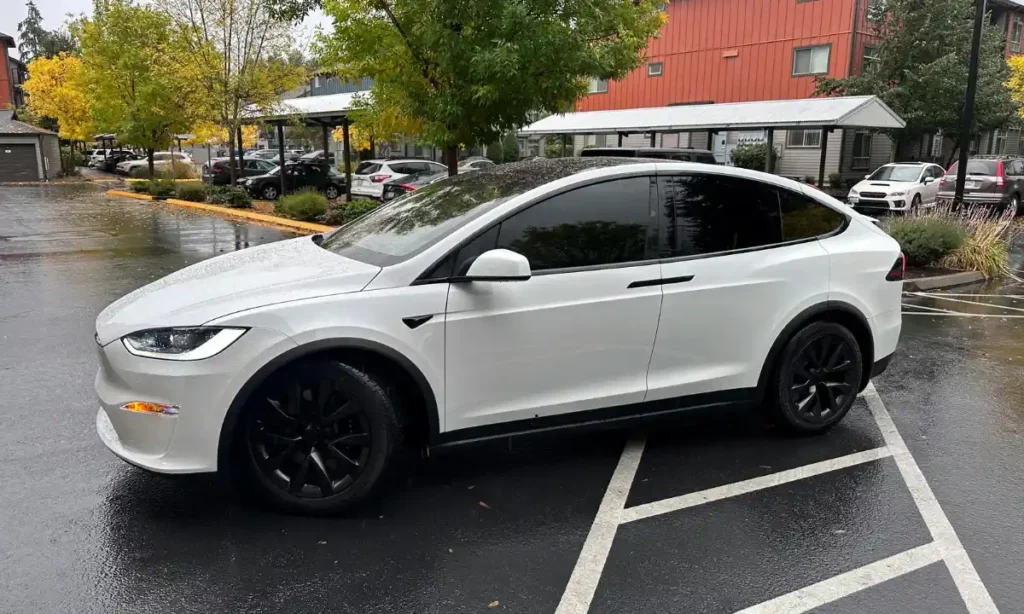
A Tesla can get uncomfortable fast after sitting in Orange County sun. The large windshield, wide side windows, rear glass, and panoramic roof allow plenty of daylight into the cabin, but they can also increase glare and solar heat. Many Tesla owners look for the film with the biggest infrared-rejection percentage, such as “95% IRR,” and assume that number guarantees the coolest cabin. That can lead to the wrong choice. The best heat-rejection window tint for a Tesla should be selected by comparing total solar performance, tint shade, nighttime visibility, glass location, and California front-window rules.
TSER, IRR, IRER, and VLT: What Tesla Owners Should Compare
Tesla tint specifications can seem confusing because film companies use several heat and visibility measurements. Each number has value, but they answer different questions. Knowing what they mean helps you avoid paying for a dark tint that has weaker heat performance than a lighter premium film.
What Is TSER?
TSER means Total Solar Energy Rejection. It measures the percentage of total solar energy rejected by the finished glass-and-film system. This includes solar energy beyond infrared wavelengths, making TSER one of the most useful figures for Tesla owners who want to reduce overall cabin heat. A higher TSER generally means less solar heat enters the vehicle through the film-coated glass. For example, a film with 60% TSER rejects more total solar energy than a comparable film with 45% TSER, assuming both ratings were tested on similar glass under comparable conditions. 3M defines TSER as the percentage of total solar energy rejected by filmed glass and states that higher TSER means less solar heat is transmitted.
What Is IRR?
IRR means Infrared Rejection. Infrared energy is a major source of the heat you feel on your skin inside a vehicle. The problem is that IRR figures can be measured across different wavelength ranges depending on the brand and product line. In 3M technical documents, IRR is measured over the 900–1,000-nanometer range. That is a limited portion of the infrared spectrum. A film can therefore show an impressive 95% or 98% IRR number while its TSER and broader infrared performance tell a more complete story about actual cabin comfort.
What Is IRER?
IRER means Infrared Energy Rejection. It is broader than narrow-band IRR because it measures infrared rejection across the 780–2,500 nanometer range. It also considers infrared energy absorbed by the film that may later reradiate into the cabin. For Tesla owners comparing heat-rejecting window tints, IRER is usually more helpful than a narrow IRR claim because it provides a broader view of infrared performance. It should still be compared alongside TSER and VLT rather than used alone. 3M states that IRER accounts for both transmitted and absorbed infrared energy that can reradiate into the vehicle.
What Does VLT Mean for Tesla Tint?
VLT, or Visible Light Transmission, measures how much visible light passes through the glass-and-film system. A lower VLT creates darker glass, while a higher VLT creates a lighter appearance. VLT affects privacy, glare reduction, side-mirror visibility, rear-camera clarity, nighttime driving, and California front-window compliance. It does not directly measure total heat rejection. A lighter ceramic or multilayer film can sometimes reject more solar heat than a darker lower-performance film.
| Metric | What It Measures | Why It Matters for Tesla Owners |
| TSER | Total solar energy rejected | Best starting point for overall heat reduction |
| IRR | Infrared rejection over a stated wavelength range | Useful only when the test range is clear |
| IRER | Broader infrared rejection, including reradiated absorbed heat | Helpful for comparing cabin heat performance |
| VLT | Visible light passing through glass and film | Affects appearance, privacy, night driving, and legal fit |
| Glare Reduction | Reduction in visible sunlight | Helpful for driving comfort and screen visibility |
Why a High IRR Claim Can Still Leave a Tesla Feeling Hot
A high infrared-rejection number can be real and still fail to answer the full question: how much solar heat will the finished Tesla glass reject? This is why a customer should look past the largest percentage printed on a marketing page.
IRR Can Be Measured Across a Narrow Range
A film advertised with “95% infrared rejection” may refer to performance within a narrow infrared wavelength range. That does not mean the claim is false. It means the number should not be compared directly with another film unless both brands use the same measurement range and test method. A 95% IRR film is not automatically cooler than a 70% IRR film. Compare TSER, IRER, VLT, glare reduction, and the exact test conditions before choosing a Tesla window tint.
Film-Only Tests and Film-on-Glass Tests Are Different
Some performance numbers are measured on film alone, while others are measured after the film is installed on glass. Film-on-glass testing is more useful for Tesla owners because it better reflects how the product will perform once installed. 3M’s technical documents state that its IRR measurement may be taken from film with liner alone, whereas TSER and IRER data are reported for film applied under the stated glass conditions. This is why a high IRR should be treated as a single data point rather than the final buying decision.
Compare Similar Shades Before Comparing Performance
Comparing a 5% limo tint to a 70% light film does not provide a fair comparison. A dark tint naturally reduces more visible light, but that does not automatically mean it offers the best balance of heat rejection, visibility, and comfort.
Use this comparison method when reviewing any Tesla tint spec sheet:
| Compare This | Why It Matters |
| Similar VLT levels | Keeps the comparison fair between lighter and darker shades |
| TSER | Shows total solar energy rejected by filmed glass |
| IRER | Shows broader infrared performance |
| IRR wavelength range | Reveals whether the claim is narrow or broad |
| Test glass | Helps confirm whether figures are comparable |
| Glare reduction | Helps with driving comfort and screen visibility |
| Warranty | Protects the film investment over time |
Tesla Glass Areas Create Different Heat-Rejection Needs
A Tesla windshield, front side window, rear glass, and glass roof should not automatically receive the same tint film or shade. Each glass area affects cabin comfort differently and has different visibility and legal considerations.
Tesla Windshield: Heat Reduction With Clear Vision
The windshield is one of the most important heat-entry areas because it sits directly in front of the driver and receives strong sunlight during daily driving. A Tesla windshield film should focus on high VLT, strong TSER, useful IRER, low haze, glare reduction, and clear nighttime visibility. A lighter high-performance film may make more sense than a darker shade because the windshield is part of the driver’s main field of vision. California also has narrow rules for windshield material, so windshield tint should be discussed separately from rear-window tint.
Tesla Front Side Windows: Heat Control Within California Requirements
Front side windows need a balance between solar comfort and California compliance. Tesla owners may prefer lighter ceramic or multilayer film on front side glass because it can reduce glare and heat while preserving visibility. California Vehicle Code Section 26708 allows clear, colorless, transparent material on front side windows only under stated conditions. The material must have at least 88% visible light transmittance, the glass-and-film system must meet the federal 70% light-transmittance requirement, and the driver must have the required certificate from the installer or manufacturer.
Tesla Rear Side Windows and Rear Glass: Privacy Plus Heat Control
Rear side windows and rear glass are usually where Tesla owners can place more focus on privacy and darker shades. A 35% or 20% ceramic tint can offer stronger privacy and glare reduction, while high TSER and IRER ratings can support better cabin comfort. The right rear tint still depends on factory glass, final VLT, nighttime driving, rear-camera visibility, and personal preference. A darker rear tint may look great during the day but can make dark garages, rain, fog, and low-light parking areas harder to see through.
Tesla Glass Roof: Choose Based on Real Comfort Needs
Tesla glass roof tint is optional. Some owners feel strong direct sun on their head, shoulders, or rear passengers and want more coverage. Others find that tinting the windshield, side glass, and rear glass solves most of the comfort problem. A roof film can make sense for Tesla owners who often park outdoors, drive long distances in direct sunlight, carry rear passengers, or want a darker cabin. It may be less necessary for drivers who park in garages, use sunshades, or already feel comfortable with the factory roof glass.
Pick the Best Tesla Tint Setup by Driving Priority
The best heat-rejection tint setup depends on how you use your Tesla. A driver who spends hours in traffic on the 405 may have different needs from someone who mostly drives at night or parks indoors.
Best for Maximum Cabin Cooling With a Light Appearance
A lighter high-performance film is a strong option for Tesla owners who want less heat without making the vehicle look heavily tinted. This setup is useful for drivers who value visibility, have a white interior, drive frequently after sunset, or want a cleaner factory-style appearance. Look for a film with higher TSER and IRER at a light VLT. This may be more comfortable than choosing a dark basic tint just because it creates a darker look.
Best for Strong Rear Privacy and Heat Control
A darker ceramic film can work well on rear side windows and rear glass for owners who want privacy and a darker exterior style. The key is to compare TSER at the shade you actually want rather than assuming all 20% or 5% films perform the same. A quality ceramic tint can provide privacy, UV protection, glare reduction, and heat rejection. However, drivers should still think about rear visibility at night before choosing very dark glass.
Best for Tesla Owners Who Drive at Night
Tesla owners who drive at night should place greater emphasis on VLT, low haze, optical clarity, and glare reduction. A very dark tint can reduce visibility through side mirrors and rear windows, especially during rain, fog, or dim parking conditions. For many night drivers, a lighter premium film can be the better choice because it reduces solar load during the day while keeping the cabin easier to see out of after dark.
Best Mixed-Film Tesla Setup
A mixed-film setup can make more sense than using one shade across every window. For example:
- Use a lighter high-performance film where visibility is the priority.
- Use darker ceramic tint on rear side windows and rear glass for privacy.
- Add roof film only if direct sun through the panoramic roof is a real comfort issue.
- Confirm final VLT on front glass before installation.
This approach lets Tesla owners focus each film choice on the job that glass area needs to perform.
3M Crystalline vs. 3M Ceramic IR for Tesla Heat Rejection
OC Tint Solutions offers both 3M Crystalline and 3M Ceramic IR options, but the better fit depends on the Tesla owner’s priorities. One is not automatically the right answer for every Tesla, window location, or tint shade.
When 3M Crystalline May Fit a Tesla
3M Crystalline may suit Tesla owners who want strong heat rejection while keeping a lighter appearance. 3M describes Crystalline as a non-metalized multilayer optical film with nanotechnology that rejects more heat than many darker films. The company states that the series can reject up to 64% of solar energy and up to 99% of heat-generating infrared rays, depending on the selected film and testing conditions. This type of film can be a useful discussion point for Tesla owners who want better visibility, reduced glare, and strong heat control without a dark look.
When 3M Ceramic IR May Fit a Tesla
3M Ceramic IR may suit Tesla owners who want a wider selection of darker shades with strong privacy and high heat performance. Ceramic IR uses absorptive nano-ceramic technology and can reject up to 66% of total solar energy and up to 95% infrared rejection, depending on the film option and stated test method. Ceramic IR can be a good fit for rear windows when the owner wants more privacy and a darker appearance while still prioritizing cabin comfort.
Compare Film Profiles Instead of Choosing by One Number
| Tesla Goal | Film Profile to Compare | Main Factors |
| Light, cooler cabin | High-performance light ceramic or multilayer film | VLT, TSER, IRER, glare reduction |
| Rear privacy | Dark ceramic tint | Final VLT, TSER, IRER, night visibility |
| Windshield comfort | High-VLT film where legally permitted | Optical clarity, VLT, glare reduction |
| Roof comfort | Optional heat-rejection film | Direct sun exposure and passenger comfort |
| Daily night driving | Light premium film | VLT, haze, glare, final appearance |
How to Compare Window Tint Brands Fairly
Tesla owners often compare 3M, XPEL, Rayno, Llumar, and other premium window tint brands. The right comparison is not “which brand has the biggest IRR number?” It is “which exact film shade provides the best total performance for my Tesla?”
Compare Exact Film Shades, Not Brand Names
Every major film brand has different product lines and shade options. A dark 5% ceramic film can have a much higher TSER than a 70% light film from the same company. That does not mean the dark film is automatically better for every Tesla owner. Always compare the exact film series and exact VLT level. A fair comparison might be 70% vs. 70% or 35% vs. 35%, rather than comparing a dark rear tint to a light front-window film.
Ask for the Exact Product Data Sheet
Before choosing a Tesla window tint, ask for:
- Film series and product name
- Film VLT
- Expected final VLT on your Tesla glass
- TSER
- IRER
- IRR and the test wavelength range
- Glare reduction
- Test-glass conditions
- Warranty details
- Installer documentation
This protects you from vague claims such as “99% heat blocked,” “best ceramic tint,” or “premium infrared film” without clear data behind them.
Non-Metallic Film and Tesla Electronics
Tesla owners often ask whether window film can affect GPS, Bluetooth, mobile service, satellite radio, or other electronics. It is reasonable to ask whether a film is non-metalized or metal-free before installation. Ceramic IR and Crystalline films use metal-free or non-metallized construction and are not intended to interfere with GPS, mobile devices, satellite radio, or 5G connectivity.
California Front-Glass Considerations for Tesla Heat-Rejection Tint
Heat rejection matters, but legal visibility matters too. Front glass should never be treated like rear glass when choosing Tesla tint.
Windshield Film Requires Separate Review
California law generally prohibits material on the windshield unless it falls within an exception. Transparent material may be used on the topmost portion of the windshield only when it meets the stated placement, color, visibility, and reflection conditions. Do not treat full windshield tint as a standard California-legal setup. Discuss your comfort goals, driving conditions, and legal placement requirements before adding windshield film.
Front Side Windows Need Final VLT Verification
A 70% film label does not automatically mean the finished Tesla window will meet California requirements. The original factory glass already blocks some visible light, so the final glass-and-film VLT can be lower than the film label suggests. Measure the Tesla’s original glass before installation and keep the required certificate in the vehicle when applicable. California law also states that worn, torn, or bubbled front-window material that prevents clear vision must be removed or replaced.
Keep Your Documentation
Keep your window-film invoice, warranty information, product data sheet, installer details, and any required certificate with your Tesla records. This makes it easier to confirm what was installed, handle warranty issues, and answer future questions about compliance or maintenance.
Tesla Heat-Rejection Tinting in Orange County
OC Tint Solutions helps Tesla owners in Anaheim, Costa Mesa, and across Orange County compare window films based on TSER, IRER, VLT, glare reduction, privacy needs, and the vehicle’s actual glass layout. The goal is to choose a film based on how you drive, rather than selecting the product with the highest infrared percentage. OC Tint Solutions offers Tesla tinting for Model 3, Model Y, Model S, Model X, and Cybertruck owners. The company lists 3M Crystalline and 3M Nano Ceramic options for automotive tinting, with guidance based on heat control, visibility, privacy, and final appearance.
Need Tesla Tint in Orange County?
Compare heat-rejection, ceramic privacy, windshield, and roof-film options with OC Tint Solutions.
FAQs About TSER vs. IRR Tesla Window Tint
Is TSER more important than IRR for Tesla window tint?
TSER is usually the better starting point because it measures total solar energy rejected by the finished glass-and-film system. IRR can still be useful, but its value depends on the wavelength range and test method used. Compare TSER, IRER, VLT, glare reduction, and test conditions together.
Why does one tint film claim 95% infrared rejection but have lower TSER?
A high IRR figure may be measured over a narrow part of the infrared spectrum. TSER measures total solar energy, including more than infrared energy alone. This is why a film can have very high IRR but a lower TSER than another product.
What is IRER in automotive window tint?
IRER means Infrared Energy Rejection. It measures infrared rejection over a broader range than narrow IRR and considers infrared energy absorbed by the film that may later reradiate into the vehicle. It is useful when comparing films at similar VLT levels.
Does darker tint always block more Tesla cabin heat?
No. Dark tint reduces visible light, but heat rejection depends on film technology, TSER, IRER, solar performance, and the original glass. A lighter high-performance ceramic or multilayer film can reject more total heat than a darker basic film.
What is the best Tesla windshield tint for heat rejection?
The best windshield option depends on California placement rules, final VLT, optical clarity, glare reduction, and heat performance. A lighter high-performance film may be discussed for comfort, but windshield material should be confirmed for legal placement before installation.
Should I tint my Tesla glass roof for heat?
Roof tint can help if direct sunlight through the panoramic glass causes discomfort or affects rear passengers. It is optional, not required. Many owners get enough benefit by focusing first on the windshield, side glass, and rear glass.
Can high-TSER tint still be light enough for night driving?
Yes. High-performance films can provide useful solar heat rejection at lighter VLT levels. This is why Tesla owners who drive frequently at night should compare lighter ceramic or multilayer films rather than assuming darker tint is the only heat-control option.
How do I compare 3M, XPEL, and Rayno tint films?
Compare exact film shades at similar VLT levels. Ask for TSER, IRER, IRR wavelength range, test-glass conditions, glare reduction, warranty, and final expected VLT on your Tesla. Do not choose a film only because one brand advertises the largest IRR percentage.
What Tesla tint is best for Orange County summer driving?
For Orange County drivers, a high-TSER film with useful IRER and a VLT that matches your daytime and nighttime driving needs is usually the best starting point. Many owners choose lighter high-performance film for visibility-focused glass and darker ceramic film for rear privacy areas.