Paint protection is a primary concern for car owners in sunny states like California, Florida, Texas, Nevada, and Arizona. Strong sunlight can fade paint, dull the clear coat, and make even a well-maintained car look older than it really is. That’s why many drivers ask the same question: Does paint protection film protect from the sun? This question matters because people want long-lasting shine without constant repainting or polishing. In this guide, you’ll learn how PPF works, how it reacts to UV exposure, and whether it actually shields your paint from the heat and light that damage it over time. This information helps you decide if investing in PPF is worth it, especially if you want to keep your car looking new while avoiding expensive repairs.
Key Takeaways About Sun Protection and PPF
Before diving into the detailed concepts, here are a few simple but essential points to understand:
- Paint protection film can reduce UV exposure to the original paint.
- PPF acts as a physical shield, absorbing a significant amount of sunlight before it reaches the clear coat.
- Modern films include UV stabilizers that slow fading.
- PPF won’t make your car immune to all sun damage, but it dramatically lowers the long-term effects.
- Combining PPF with ceramic coating or tinting further enhances protection.
- Regular washing and safe maintenance help PPF last longer.
What Sun Damage Really Does to Car Paint
UV rays break down your car’s paint in small steps. The top clear coat weakens first, leading to dullness, fading, and eventually peeling. Heat also plays a role by expanding and contracting the paint, causing micro-cracks that grow over time. When sunlight hits unprotected paint every single day, the clear coat can lose its shine faster than expected. In states with harsh sun, this process speeds up even more.
Sun exposure affects dark-colored cars more quickly because they absorb more heat, while lighter shades may fade slowly but still show oxidation after years of direct UV exposure. Even brand-new vehicles can lose gloss if parked outside every day. This is why car owners often invest in PPF early: blocking the sun from reaching the paint is the simplest way to preserve factory shine. And if you’re looking for expert help, Octint Solutions offers professional PPF installation to shield your vehicle from heat, UV rays, and daily wear.
Does Paint Protection Film Protect from the Sun and Block UV Rays?
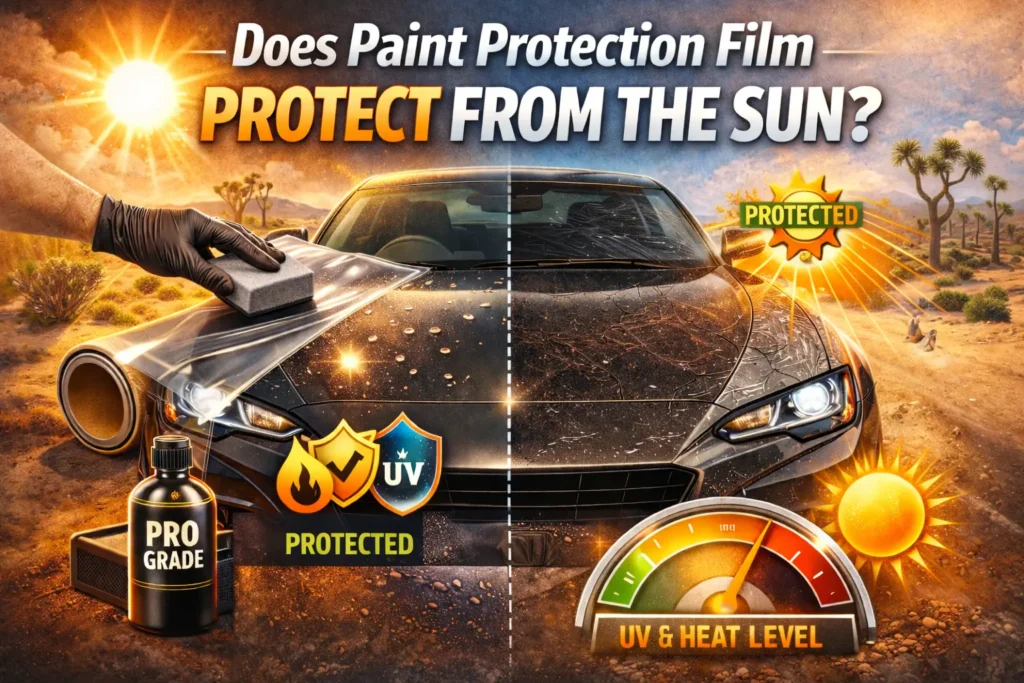
The answer is yes, paint protection film can block a noticeable amount of UV rays, but the exact amount depends on the brand, quality, and thickness of the film. High-quality PPF contains UV-resistant materials that absorb harmful rays before they reach the paint. Instead of letting sunlight break down the clear coat, the film takes the impact.
However, it’s essential to be realistic. PPF doesn’t create a full shield against UV light the same way window tint does. Instead, it reduces the intensity of UV damage. That reduction is what slows fading and keeps your car looking new for years, not months. If you combine PPF with a ceramic coating layer, the sun protection becomes even stronger because you now have two barriers working together.
If you want to maximize protection, getting your film installed by professionals is key. A film that is stretched poorly or contaminated during installation won’t handle heat or sunlight properly. That’s something Octint Solutions specializes in, clean, bubble-free, and long-lasting installations.
How Heat and UV Rays Affect PPF Over Time
Paint protection film is designed to be durable, but sunlight still affects how it ages. Heat can cause the film to expand slightly, while nighttime temperatures make it contract. Over time, this cycle can soften the adhesive and affect clarity if the film is low quality or installed incorrectly. UV rays also play a role, slowly breaking down the polymers in the film. The good news is that premium PPF is engineered with stabilizers that delay this process, which means it maintains its gloss and protective strength far longer than cheaper alternatives. In extremely hot regions like Arizona, Nevada, or Southern California, choosing a high-grade film becomes even more important because your car is exposed to sunlight almost every day. When installed properly, quality film stays clear, resists yellowing, and continues to block a large amount of UV exposure.
Does the Sun Still Affect Your Car Even With PPF?
While PPF adds a dependable layer of defense, it doesn’t turn your vehicle into something that sunlight can’t touch. Heat still warms the film’s surface, and UV rays still interact with its outer layer. However, the critical part is that the paint underneath stays far safer than it would without protection. Some fading may occur on exposed film surfaces over many years, especially on cars parked outside full-time, but the paint stays much more stable. This is why many car owners in hot states choose to combine PPF with additional protection such as tint or ceramic coating. These layers work together to reduce the amount of heat and sunlight your paint absorbs.
PPF vs. Ceramic Coating for UV Protection
Both PPF and ceramic coating help with sun exposure, but they work in different ways. PPF uses a physical shield that blocks a portion of UV rays and absorbs their impact before they reach the paint. Ceramic coating, on the other hand, creates a thin, hardened surface that reflects some UV energy and stops contaminants from sitting directly on the paint. When comparing the two, PPF offers a stronger defense against fading because it is thicker and has better impact resistance. Ceramic coating enhances shine and adds an easy-clean effect, but doesn’t prevent heat buildup as strongly as film. This is why many car owners use both together, PPF for the front end and high-impact zones, and ceramic coating on top of the film to improve longevity.
Other Benefits of PPF in Areas With Strong Sunlight
PPF doesn’t just help with UV exposure. It also protects the paint from rock chips, light scratches, road debris, and bug acids, all of which are more common on highways in sunny states where long-distance driving is part of everyday life. The self-healing ability of premium PPF also helps minor marks disappear when the surface is heated. Another major benefit is that PPF keeps your paint glossy for years without constant upkeep. Areas like Florida and Texas experience intense sun combined with coastal or dusty conditions, which accelerate vehicle aging.
Choosing the Right Paint Protection Film for Sun Defense
Not all films are created equal, so choosing the right one makes a big difference in how well your vehicle handles sunlight. Top films like STEK, XPEL, Llumar, and SunTek come with UV stabilizers, extended warranties, and intense clarity even after years of exposure. When comparing films, consider factors such as thickness, gloss level, heat resistance, warranty length, and whether the film is known to yellow over time. You should also make sure the installer has experience with full-body wraps and complex curves because a poor installation reduces the protection benefits. At Octint Solutions, we use high-quality materials and follow strict installation steps to ensure the film bonds correctly and survives long-term exposure to heat. This gives US car owners peace of mind knowing their paint is protected even in the harshest temperatures.
How Long Does PPF Last Under Heavy Sun Exposure
One of the most common questions people ask before investing in PPF is,how long does Paint Protection Film actually last? Longevity usually depends on climate, maintenance, and film quality. In cooler states, PPF can last 10 years or more, while in very sunny regions, the lifespan might shorten to around 7–8 years if the car sits outside daily. Regular washing, avoiding harsh chemicals, and keeping the film free of debris help extend its life. Heat doesn’t degrade PPF quickly, but it does slowly age the outer layer over time. Premium films hold up well because they are built to handle exposure without losing clarity too early. If the film begins showing signs of aging, like minor surface marks or reduced shine, it doesn’t mean your paint is damaged. Instead, it means the film is doing its job by absorbing the wear so your paint doesn’t have to.
How to Maintain PPF for Maximum UV Protection
Even though paint protection film is designed to withstand sunlight, how you care for it plays a significant role in how well it continues to block UV rays. Washing the car regularly helps remove dust, pollen, and road film that can degrade the surface’s clarity over time. Using pH-neutral shampoo and soft microfiber wash tools prevents unnecessary marks that could develop on neglected vehicles. You should also avoid strong chemicals, abrasive pads, or automatic brushes, as they can damage the film’s top layer. Parking in shaded spots when possible helps slow heat buildup and extend the film’s lifespan. Some owners choose to apply a ceramic coating over the PPF, which provides additional UV resistance and makes cleaning easier.
Does Paint Protection Film Fade or Yellow Under the Sun?
Older film products often yellowed because they lacked strong UV stabilizers. Today’s premium films from brands like Llumar, SunTek, STEK, and XPEL are far more advanced and engineered to resist this problem. That said, budget films or poorly stored products can still discolor if exposed to constant sunlight, especially on white or silver cars, where changes are more noticeable. Fading usually begins with a slight shift in tone or loss of clarity on the top layer of the film. This doesn’t mean the paint underneath is affected. It simply shows that the film has absorbed years of sunlight so your paint doesn’t have to. To avoid discoloration, it’s best to choose high-quality cinema and have it installed by trained technicians. Octint Solutions uses reliable film lines known for resisting yellowing under heavy UV exposure, which helps US car owners protect their vehicles longer.
Does PPF Make Heat Worse or Better?
Many drivers wonder whether covering a car with PPF traps heat or reflects it better than bare paint. The truth is that high-quality PPF usually helps reduce the amount of heat that reaches the paint by adding a thin barrier to infrared radiation. It doesn’t make the surface “cool,” but it slows the rate at which the paint absorbs heat on extremely sunny days. Cars without PPF tend to heat up more quickly, especially in darker colors. While PPF won’t replace window tint or other heat-control products, it does improve surface stability. When paired with tint or ceramic coating, the overall temperature impact becomes even better. If you’re considering full-vehicle protection, you can combine PPF and ceramic coatings.
Is PPF Worth It for UV Protection?
For drivers in sunny states, PPF offers substantial value because it protects the areas most affected by sunlight, mainly the hood, bumper, fenders, roof edge, and side mirrors. These parts fade faster without any protection. PPF also prevents rock chips, which can be harder to repair once sunlight oxidizes exposed metal. While ceramic coating helps with UV reflection, PPF gives a much stronger physical shield, making it the better choice if long-term paint life is your priority. The investment pays off when your car maintains its original color and finish even after years of exposure to the sun. For many US car owners, the combination of UV protection, scratch resistance, and impact reduction makes the cost justified.
Where to Get Expert Paint Protection Film Installation in the US
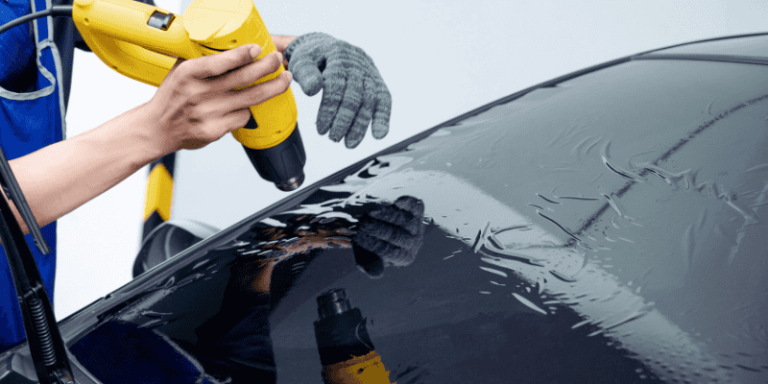
Getting PPF installed correctly is one of the most significant factors in how well the film protects your car against UV damage. A skilled installer ensures the film adheres smoothly, avoids trapped moisture, trims edges cleanly, and selects the right film grade for your region and lifestyle. DIY kits often fail because they leave edges exposed or stretch the film unevenly, which leads to early lifting, peeling, or discoloration. By choosing a certified installer, you protect your investment and ensure the movie lasts for years without issues. Octint Solutions offers professional PPF installation with proven film brands and advanced application methods, providing car owners with dependable protection in any climate.
Conclusion: Does Paint Protection Film Protect from the Sun?
Paint protection film provides strong protection against the sun by blocking a significant amount of UV rays, slowing fading, and keeping your paint looking fresh for years. While sunlight still interacts with the film’s outer layer, the paint underneath stays far safer than it would without protection. The right movie, paired with good maintenance and expert installation, provides years of shine, durability, and color stability. If you live in a sunny area or keep your car outside frequently, PPF is one of the most effective ways to protect your paint. To get the most from this investment, you can trust Octint Solutions to install high-quality film that delivers excellent UV protection and long-term results.
FAQs
1. Does paint protection film block all UV rays?
PPF blocks a large portion of UV rays, but not 100%. It significantly slows fading, helping maintain the car’s color and gloss over the years.
2. Can PPF stop my car from overheating in the sun?
PPF slightly reduces heat absorption, but its primary purpose is to protect the paint. Window tint and ceramic coating offer better heat-control benefits.
3. How long does PPF last in hot climates?
Premium films usually last 7–10 years. In very sunny states, it may age a bit faster, especially if the car is parked outside all day.
4. Will PPF discolor under heavy sunlight?
High-quality films resist yellowing. Cheaper films or those installed incorrectly are more likely to discolor.
5. Should I get ceramic coating on top of PPF?
Many owners choose to add ceramic coating because it improves UV resistance and makes cleaning easier. It’s optional but highly beneficial.