
A patient sitting in an exam room should not be visible from the parking lot. A person waiting at reception should not be able to read information displayed on a staff computer. Patients should also be able to wait, recover, or speak with a healthcare provider without harsh glare, excessive heat, or a clear view from a public hallway. Yet many medical offices use large exterior windows, glass doors, interior partitions, and open reception areas that create privacy and comfort problems.
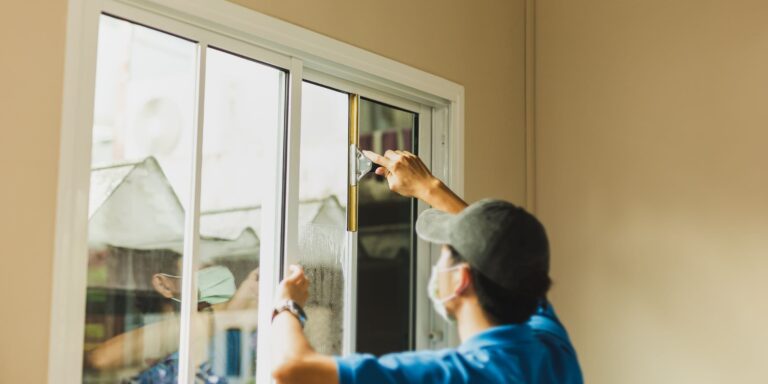
Window tinting for medical offices can help solve these issues without requiring full glass replacement or major construction. The right privacy window film can block unwanted sightlines while allowing natural light to enter. Solar-control film can reduce heat and glare in waiting rooms, treatment spaces, and staff offices. Decorative film can add privacy, room identification, or branding to interior glass.
Window film should still be presented accurately. It can support a medical office’s physical privacy safeguards, but it does not make a facility HIPAA compliant on its own. HIPAA compliance also depends on staff procedures, computer security, records management, patient communication, employee training, and other administrative and technical controls.
Quick answer: Medical office window tinting can restrict unwanted views into exam rooms, consultation spaces, reception areas, and staff workstations. Depending on the product, it can also reduce solar heat, glare, and UV exposure. Window film can support patient privacy, but it cannot independently guarantee HIPAA compliance.
Can Window Film Help a Medical Office Meet HIPAA Privacy Requirements?
Privacy window film may support a medical office’s physical privacy measures by limiting visual access to patients, medical records, computer screens, and treatment activity. However, the Health Insurance Portability and Accountability Act does not require a specific type of window tint or state that installing privacy film makes a healthcare provider compliant.
The HIPAA Privacy Rule protects individually identifiable health information held or transmitted by covered entities and their business associates. This protected health information, commonly called PHI, may exist electronically, on paper, or through spoken communication. Healthcare organizations are expected to use reasonable safeguards based on their size, layout, workflow, resources, and privacy risks.
What HIPAA Means by Reasonable Safeguards
Reasonable safeguards are practical steps a healthcare organization takes to reduce unnecessary access to protected health information. HHS does not require medical offices to eliminate every possible incidental disclosure. Each organization must review its own working environment and decide which safeguards are reasonable for protecting patient information.
In a medical office, these safeguards may include positioning computer monitors away from public areas, keeping medical charts out of sight, controlling access to treatment spaces, using screen privacy filters, lowering voices during sensitive conversations, and adding visual barriers to clear glass.
Window film becomes relevant when the building layout allows people to see information or patient activity that they do not need to see. A frosted film installed on a consultation-room door, for example, may remove a direct hallway sightline without blocking daylight or requiring the glass to be replaced.
What Privacy Film Can Protect From View
Privacy film can reduce visual exposure in areas such as:
- Exam rooms facing a street or parking lot
- Consultation rooms with clear glass doors
- Reception desks visible from waiting-room seats
- Computer screens positioned near interior glass
- Administrative offices containing medical records
- Billing areas handling insurance information
- Patient check-in counters
- Therapy rooms and behavioral-health practices
- Glass partitions between public and clinical areas
- Door sidelights next to treatment rooms
These risks are not theoretical. In one HHS enforcement example, patient information displayed on computer screens was easily visible to other patients. Corrective actions included repositioning computer monitors and installing privacy screens. This shows why healthcare providers should review visual access to information across the entire office rather than concentrating only on locked records or digital passwords.
What Window Film Cannot Protect Against
Window film should be treated as one part of a wider privacy plan. It cannot:
- Prevent people from overhearing conversations
- Secure electronic health records
- Replace the employee privacy training
- Replace computer passwords or automatic screen locks
- Correct every poorly positioned monitor
- Replace monitor privacy filters
- Control access to restricted rooms
- Protect documents left unattended
- Provide legal or regulatory certification
- Guarantee that a facility complies with HIPAA
A professional installer can evaluate the glass, room layout, lighting, and required level of visual privacy. Legal and compliance decisions should remain with the healthcare organization and its qualified privacy or legal advisers.
A Room-by-Room Privacy and Comfort Plan
Every area of a medical office has a different purpose. Using one dark or reflective film on every pane may create new problems, including poor nighttime privacy, reduced daylight, excessive reflectivity, or loss of visibility between staff areas. A room-by-room plan makes it possible to select the correct privacy level, appearance, and solar performance for each space.
Reception and Patient Check-In
The reception area is one of the most common places for visual privacy problems. Staff may have appointment schedules, insurance details, contact information, medical notes, and billing records displayed on monitors or printed documents. Patients standing in line or sitting nearby may have a clear view of this information. Frosted privacy bands can block sightlines at seated or standing eye level while leaving the upper section of the glass clear.
Decorative film can create the same visual barrier while adding a logo, pattern, department name, or office design. If sunlight is also creating glare on reception monitors, solar-control film may be needed on nearby exterior windows. Full glass coverage is not always necessary. An on-site sightline review can identify exactly where private information becomes visible and determine whether a targeted privacy band will solve the problem.
Waiting Rooms and Street-Facing Windows
Waiting rooms need to feel bright and welcoming, but large street-facing windows may expose patients to people walking past the building. This can be particularly concerning for behavioral-health practices, fertility clinics, specialist offices, and other medical services where patients may prefer greater discretion. Exterior windows can also create uncomfortable hot spots. Patients seated beside the glass may experience strong afternoon sun, screen glare, or uneven indoor temperatures.
Solar-control window film can reduce glare and solar heat while preserving much of the natural light. Frosted lower sections or decorative bands can add visual privacy without covering the entire window. Reflective film may provide daytime privacy in suitable lighting conditions, but it must be assessed carefully. It may stop working as expected after sunset if the office interior becomes brighter than the exterior.
Exam, Treatment and Consultation Rooms
Exam rooms require a more dependable level of privacy than most public areas. A person should not be able to see a patient changing, receiving treatment, or speaking privately with a healthcare provider through a glass door, sidelight, hallway partition, or exterior window. Frosted window film is usually the most predictable option for these spaces because it obscures views from both directions. It can cover an entire pane or only the area where direct sightlines exist. The translucent finish allows diffused daylight to enter while removing a clear view of people, movement, and objects.
Decorative privacy film can provide the same function with a softer pattern or branded appearance. Smart film may be considered in rooms that occasionally require clear visibility, though it involves a higher cost and electrical components.
Administrative, Billing and Staff Workspaces
Administrative offices often contain computer screens, appointment calendars, printed patient records, insurance information, and billing documents. Clear glass walls can create an open office appearance, but they may also allow visitors or patients to see information from a corridor or waiting area. Privacy film applied at workstation height can protect the sensitive portion of the room without fully enclosing it. Frosted or gradient film can also create separation between administrative and public spaces. Where exterior sunlight affects staff comfort or screen visibility, a separate solar-control film may be needed.
Privacy and solar performance should be evaluated as different requirements. A clear solar film may control heat without hiding computer screens, while a frosted film may provide visual privacy without delivering the solar performance required on a west-facing exterior window.
Specialty Medical Spaces
Different healthcare services may require different film specifications.
Dental and orthodontic offices often use open treatment areas and glass partitions. Privacy bands can reduce direct views between patient chairs while preserving the open layout and staff visibility.
Therapy and behavioral-health practices may need greater discretion around entrances, waiting rooms, and counseling spaces. Frosted or decorative film can protect patient identity without giving the office a closed or institutional appearance.
Pharmacies, laboratories, and restricted storage areas may require opaque film to prevent people from seeing products, supplies, or controlled materials. Accessible exterior glass may also be evaluated for safety or security film, depending on the facility’s risk assessment.
Which Window Film Is Best for Each Privacy Need?
The best medical office window film depends on the direction of the sightline, required privacy hours, room purpose, natural-light goals, glass construction, and solar exposure. The following comparison provides a practical starting point.
| Window-film type | Best use | Privacy performance | Natural light | Main limitation |
| Frosted film | Exam rooms, door sidelights, and partitions | Consistent two-way privacy | Allows diffused light | Removes clear outward views |
| Decorative film | Reception areas and branded interiors | Partial or full privacy | Depends on pattern | Privacy varies with design density |
| Reflective film | Selected exterior windows | Mainly daytime privacy | Moderate | Privacy may weaken at night |
| Smart film | Flexible consultation spaces | Switchable privacy | Changes by setting | Higher cost and electrical work |
| Solar-control film | Waiting rooms and exterior offices | Depends on product | High to moderate | May provide little visual privacy |
| Opaque film | Storage and restricted spaces | Complete visual blockage | None | Can make a room feel enclosed |
| Safety or security film | Accessible exterior glass | Usually clear | High | Does not create visual privacy by itself |
Window Film vs. Blinds, Curtains and Replacement Glass
Window film is often compared with fabric curtains, blinds, etched glass, or full glass replacement. Each option has advantages, and the right answer depends on how the room is used.
| Consideration | Window film | Blinds | Fabric curtains | Etched or replacement glass |
| Continuous privacy | Yes, with the correct film | Depends on position | Depends on closure | Yes |
| Natural light | Can remain available | Often reduced | Often reduced | Usually available |
| Moving parts | None | Slats and controls | Tracks or hooks | None |
| Cleaning | Flat surface | Individual slats | May require laundering | Flat surface |
| Adjustable privacy | Smart film only | Yes | Yes | No |
| Installation impact | Usually limited | Limited | Limited | Often greater |
| Future removal | Usually possible | Easy | Easy | Difficult |
| Custom branding | Strong options | Limited | Moderate | Permanent |
Cleaning and Maintenance in Medical Offices
Applied window film creates a flat surface without cords, slats, fabric folds, or mechanical parts. This can make regular wiping simpler than cleaning multi-slat blinds or laundering curtains. The film must still be maintained correctly. The IWFA recommends non-abrasive glass-cleaning products and notes that Low-E compatibility depends on the type and location of the Low-E surface and the desired performance.

Abrasive pads, scrapers, brushes, and harsh tools may scratch or damage the film. Cleaning should begin only after the product has cured for the period specified by the manufacturer. Window film should not be described as an infection-prevention product. Medical offices should confirm that their normal cleaners and disinfectants are compatible with the selected film and follow their own sanitation procedures.
When Blinds or Other Treatments May Be Better
Blinds may remain useful where occupants need to adjust light several times during the day. Curtains may be necessary where a room occasionally needs complete darkness. Clear glass may need to remain available in areas where staff must frequently observe activity on the other side.
Other treatments may also be more suitable where:
- The building lease prohibits film
- The glass is incompatible with the desired product
- Nighttime outward visibility is important
- The room needs complete blackout conditions
- Privacy requirements change frequently
- The existing film or glass is already damaged
A responsible installer should explain these limitations instead of recommending film for every pane.
What Should Be Evaluated Before Medical Office Window Tinting?
A site assessment should take place before choosing the final product. Small differences in lighting, window direction, glass construction, or viewing height can change how a film performs.
Daytime and Nighttime Sightlines
Privacy should be checked from every realistic viewing position, including:
- Sidewalks
- Parking areas
- Building entrances
- Neighboring suites
- Hallways
- Waiting-room chairs
- Reception queues
- Seated eye level
- Standing eye level
- Children’s eye level where relevant
- Exterior viewpoints after sunset
This process helps determine whether the glass needs full coverage, partial banding, gradient frost, or a different product.
Glass and Film Compatibility
Before installation, the existing glazing should be identified. Common types include single-pane, insulated, tempered, laminated, factory-tinted, and Low-E glass. Applying the wrong film to an unsuitable glass system can create warranty concerns or raise the risk of thermal stress. Compatibility depends on the glass construction, coating position, window size, shading, edge condition, frame, climate exposure, and selected film.
The installer should confirm:
- Whether the film is approved for the glass
- Whether it will be applied inside or outside
- Whether a glass-breakage warranty is available
- Whether the insulated-glass seal remains covered
- Whether existing damage needs attention
- Whether the frame can support a security attachment system
Performance Data
Medical-office managers should compare measurable product information rather than relying on broad phrases such as “maximum heat rejection.”
Useful ratings include:
| Rating | What it explains |
| VLT | Percentage of visible light transmitted |
| TSER | Total solar energy rejected by the glazing system |
| SHGC | Portion of solar heat allowed through |
| UV transmission | Amount of UV radiation passing through |
| Visible reflectance | How reflective the glass appears |
| Glare reduction | Reduction in visible brightness |
| Film thickness | Physical thickness, often relevant to safety films |
NFRC independently tests and certifies energy-performance information for qualifying window-film products, providing a useful source for comparing rated performance.
Building, Lease and Safety Requirements
Many Orange County medical offices operate in leased, multi-tenant commercial properties. Before installing exterior-facing film, the practice may need approval from the landlord or property manager. Some buildings have rules governing exterior color, reflectivity, signage, or façade consistency. Special glazing may also require additional review. Fire-rated glass, emergency exits, corridor doors, and required observation panels should not be covered without confirming applicable building and safety requirements. The medical office should coordinate unusual applications with its property manager, architect, safety team, or relevant authority.
Warranty, Lifespan and Future Removal
Commercial window-film proposals should clearly state the manufacturer warranty and the installer’s workmanship coverage. Warranty length may vary based on the film series, glass type, orientation, interior or exterior application, and maintenance.
The proposal should also explain:
- What peeling, bubbling, or edge failure is covered
- Whether discoloration is covered
- Whether glass breakage is covered
- Which cleaners may be used
- Whether ownership transfer affects the warranty
- How film can be removed from leased premises
- Whether adhesive cleanup is included
What Does Medical Office Window Film Cost?
The cost of medical office window film depends on the amount of glass, product type, access, customization, and installation schedule. A reliable quote requires measurements and a review of the existing windows.
Price factors commonly include:
- Total square footage
- Number and size of individual panes
- Frosted, decorative, solar, smart, or security film
- Full coverage or partial privacy bands
- Custom logos, patterns, or printed graphics
- Removal of existing film
- Interior or exterior installation
- After-hours or weekend scheduling
- Height and lift access
- Smart-film electrical work
- Security-film attachment systems
- Glass and frame condition
- Room-by-room phasing
A very low quote may leave out glass preparation, film removal, custom cutting, warranty coverage, or after-hours work. Medical-office managers should compare the full installation scope rather than looking only at the total price.
How to Compare Window Film Quotes
Ask each installer to provide:
- Manufacturer and exact product series
- Current technical data sheet
- Daytime and nighttime privacy expectations
- VLT, TSER, SHGC, and reflectance data
- Glass compatibility confirmation
- Coverage measurements
- Installation method
- Surface-preparation details
- Product and labor warranties
- Cleaning instructions
- Estimated schedule
- Written exclusions
- A sample or mock-up where practical
How to Evaluate an Installer
A commercial installer should be able to explain why a specific product fits each room rather than suggesting the same film for the entire building.
Look for:
- Commercial window-film experience
- Valid contractor information where applicable
- Insurance coverage
- Manufacturer training
- Written product documentation
- A glass-assessment process
- Clear explanations of one-way-film limitations
- Phased or after-hours scheduling options
- Workmanship and manufacturer warranties
- Local project examples
OC Tint Solutions lists California contractor license number 1126692 and serves customers through its Anaheim and Costa Mesa locations.
Professional Medical Office Window Tinting in Orange County
Orange County medical offices often combine large storefront-style glass with strong Southern California sunlight. A ground-floor clinic in Irvine, Anaheim, Santa Ana, Costa Mesa, Tustin, Orange, Newport Beach, Huntington Beach, or Fullerton may need privacy from sidewalks and parking areas while also dealing with afternoon heat and glare. The best result usually comes from using different films for different areas. A waiting room may need high-light-transmission solar film. An exam-room sidelight may need full frosted coverage. A reception partition may work best with a custom privacy band. An administrative office may need both solar control and protection from direct sightlines.
OC Tint Solutions can assess room use, viewing angles, lighting, glass type, and solar exposure before recommending a product. This avoids the common mistake of applying one dark film across an entire medical property without considering how each room operates.
Frequently Asked Questions About Medical Office Window Film
Does one-way window film provide privacy at night?
Not reliably. If the medical office interior is brighter than the exterior, people outside may be able to see through the glass. Frosted film is a more predictable choice where privacy is needed during both daytime and evening hours.
Will frosted film make an exam room dark?
Frosted film removes clear views but can still transmit diffused daylight. Brightness depends on the product’s VLT, coverage area, glass type, and available natural light.
Can privacy film be installed only at eye level?
Yes. Partial privacy bands can block views at seated or standing eye level while keeping the upper glass clear. Sightlines should be checked from hallways, seating areas, sidewalks, and parking spaces.
Can window film reduce heat and glare?
Solar-control films can reduce solar heat gain and visible glare. Actual performance depends on the selected film, glass type, window direction, shading, and film-and-glass combination.
Can window film be installed on Low-E or double-pane glass?
In many cases, yes, but compatibility must be confirmed. The coating location, insulated-glass construction, film type, solar exposure, and desired performance all affect product selection.
Is window film easier to clean than blinds?
Film provides a flat surface without slats, cords, or fabric folds. It may be easier to wipe, but only non-abrasive products approved for the film should be used.
Is security window film bulletproof?
No. Safety and security film may help hold broken glass together and may delay access as part of a tested glazing system, but it is not bulletproof and does not replace ballistic glass.
Improve Privacy and Comfort Throughout Your Medical Office
The right window film can help a medical office protect visual privacy, reduce glare, manage solar heat, preserve natural light, and create a cleaner, more professional appearance. The key is selecting each film according to the room’s actual function rather than applying the same product throughout the property. OC Tint Solutions provides commercial window-film installation and assessments for medical offices, clinics, dental practices, therapy offices, and other healthcare properties across Orange County. Our team can review exterior and interior sightlines, glass compatibility, daytime and nighttime privacy, solar exposure, and installation scheduling before recommending privacy, decorative, solar-control, or safety film.