Choosing the right window tint percentage sounds simple until you realize how much it affects your daily driving experience. A tint that looks perfect on one vehicle may feel too dark, too light, or even illegal on another. Many drivers in Anaheim and Costa Mesa choose tint mainly for appearance, then later struggle with poor nighttime visibility, weak heat rejection, or local tint law issues. The right window tint should improve comfort, reduce glare, block ultraviolet radiation, protect your interior, and still give you clear visibility on the road.
Southern California drivers deal with strong sunlight, warm temperatures, heavy traffic, and long commutes throughout the year. That makes automotive window tint more than a cosmetic upgrade. A properly selected window tint film can lower interior heat, reduce eye strain, improve energy efficiency inside the vehicle, and help protect passengers from UV exposure during daily driving. The key is understanding which tint percentage actually fits your driving habits, vehicle type, and comfort preferences.
At OC Tint Solutions, many drivers from Anaheim and Costa Mesa ask the same question before installation: “What tint percentage should I get?” The answer depends on visibility needs, privacy expectations, local California regulations, and the type of window film being installed. This guide explains everything clearly so you can make the right decision before tinting your vehicle.
What Window Tint Percentage Actually Means
Window tint percentage refers to the amount of visible light that passes through your vehicle windows after the tint film is installed. This measurement is called Visible Light Transmission (VLT). A higher VLT percentage allows more light into the vehicle, while a lower percentage blocks more light and creates a darker appearance. For example, a 70% window tint allows 70% of visible light to pass through the glass. A 5% tint only allows 5% of light through, which creates the dark “limo tint” appearance many people recognize immediately. This percentage directly affects visibility, privacy protection, glare reduction, and overall driving comfort.
Many drivers assume a darker tint automatically means better performance. That is not always true. Modern ceramic window tint can reject infrared heat and ultraviolet radiation even with lighter shades. This means a lighter ceramic film can sometimes outperform a darker dyed window film in heat rejection and UV protection.
For drivers in Anaheim and Costa Mesa, understanding VLT matters because California window tint laws regulate how dark certain windows can be. Choosing the right percentage from the start helps avoid legal problems while still giving you the appearance and comfort you want.
Understanding Visible Light Transmission (VLT)
Visible Light Transmission measures how much visible spectrum light enters through the glass and window tint film combined. The lower the VLT percentage, the darker the tint appears from the outside. A common mistake drivers make is choosing a percentage based only on appearance photos online. Tint often looks different depending on vehicle size, interior color, sunlight conditions, and factory glass shading. A 35% tint on a white SUV can appear lighter than the same film on a black sedan.
Professional installers use tint meters to measure Visible Light Transmission accurately. This becomes especially important when combining aftermarket window film with factory tint already built into the glass.
Factory Tint vs Aftermarket Window Film
Many SUVs and trucks already include factory tint on rear windows. However, factory tint and aftermarket window tint film are very different products. Factory tint is created by adding pigment directly into the glass during manufacturing. It mainly provides privacy and darker appearance. Most factory-tinted glass does very little for infrared heat rejection or ultraviolet radiation blocking.
Aftermarket window film adds performance benefits that factory glass usually lacks, including:
- UV protection
- Heat rejection
- Glare reduction
- Improved interior comfort
- Reduced solar heat gain
- Better protection for leather and dashboard materials
This difference becomes noticeable during summer driving in Orange County. Vehicles parked outside in Anaheim or Costa Mesa can heat up quickly under direct sunlight. High-quality ceramic window film helps reduce cabin temperatures significantly compared to untreated glass or factory tint alone.
Another important point is that factory tint cannot be removed easily because it is part of the glass itself. Installers must calculate the final Visible Light Transmission carefully before adding aftermarket film on top of factory-tinted windows.
Quick Window Tint Percentage Chart
Choosing the correct tint often becomes easier when you compare percentages side by side.
| Window Tint Percentage | Best For | Main Benefit | Common Concern |
| 70% Tint | Windshields | Heat reduction with clear visibility | Limited privacy |
| 50% Tint | Daily commuting | Comfortable daytime and night driving | Mild privacy only |
| 35% Tint | Balanced appearance | Popular mix of style and visibility | Moderate darkness |
| 20% Tint | Privacy and cooling | Strong glare and heat reduction | Harder nighttime visibility |
| 5% Tint | Maximum privacy | Very dark appearance | Illegal in many situations |
Many drivers choose 35% as a visual middle ground, but the right setup depends on where the film will be installed, how often you drive at night, and the legal limits for each window.
How to Choose the Right Tint Percentage for Your Driving Needs
Best Window Tint for Heat Rejection
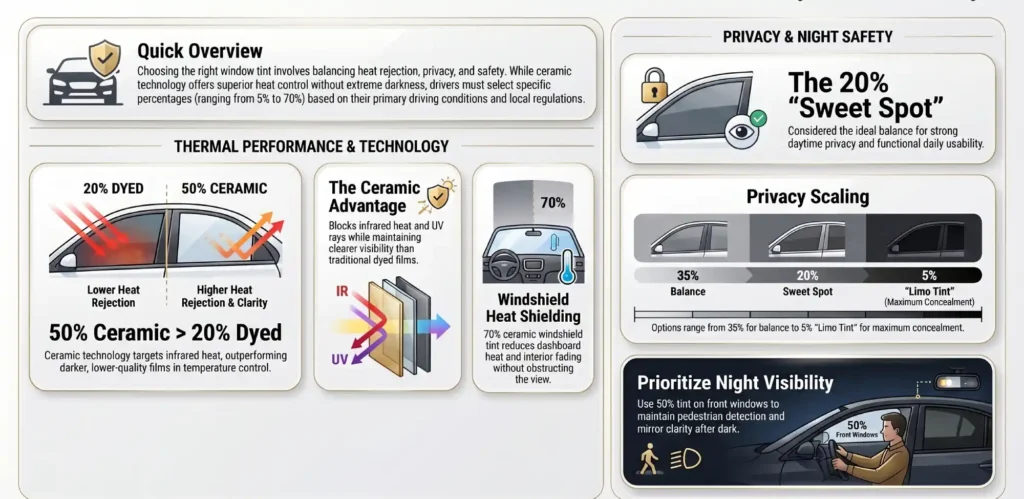
Heat rejection is one of the main reasons California drivers install automotive window tint. Vehicles exposed to direct sunlight can develop extremely hot cabin temperatures within minutes, especially during summer afternoons. Ceramic window tint performs best for reducing infrared heat while keeping visibility comfortable. Unlike dyed window film, ceramic technology blocks heat without requiring extremely dark shades.
Benefits of ceramic window tint include:
- Better infrared heat rejection
- Reduced interior temperatures
- Lower glare levels
- Improved energy efficiency
- UV protection for passengers and interior surfaces
- Clearer visibility compared to darker low-quality films
Drivers who spend long hours commuting through Orange County often prefer ceramic window film because it keeps the cabin cooler without creating visibility issues during nighttime driving. A lighter 50% ceramic window tint can sometimes outperform a darker 20% dyed film in heat control because ceramic technology targets infrared heat instead of simply darkening the glass.
Best Tint Percentage for Privacy Protection
Privacy protection is another major reason people choose darker window tint percentages. Drivers with families, work equipment, or valuables inside the vehicle often want stronger privacy from outside visibility. Popular privacy-focused setups include:
- 35% tint for balanced privacy
- 20% tint for stronger privacy
- 5% limo tint for maximum concealment
A 20% window tint is often considered the sweet spot for privacy and daily usability. During daylight, it becomes difficult for outsiders to see clearly into the vehicle while still maintaining decent outward visibility for the driver.
Limo tint provides the darkest appearance, but it can create major visibility challenges at night, especially on roads with limited lighting. In many California situations, extremely dark tint may also violate local regulations on front side windows. Professional installers usually help drivers choose a shade that improves privacy without creating safety problems during evening driving.
Best Window Tint for Night Driving Visibility
Night driving visibility should never be ignored when selecting best window tint percentage. A film that feels comfortable during daytime sunlight may become difficult to see through after sunset. Darker tint reduces incoming light during nighttime driving, which can affect:
- Parking visibility
- Lane changes
- Pedestrian detection
- Rainy weather visibility
- Side mirror clarity
Drivers who frequently travel at night often choose:
- 50% tint for front windows
- 35% tint for balanced visibility
- Ceramic film for better optical clarity
Ceramic window film is especially helpful because it maintains better visibility quality than cheaper dyed films. Lower-quality tint sometimes creates hazy reflections or distortion that becomes more noticeable after dark. For drivers in Anaheim and Costa Mesa who regularly drive on busy roads and freeways, maintaining clear nighttime visibility is just as important as daytime heat reduction.
Best Tint Percentage for Windshields
Windshield tint has become increasingly popular across Southern California because windshields allow a large amount of solar heat into the vehicle. Most drivers choose:
- 70% ceramic windshield tint
- 50% ceramic windshield tint where legally permitted
These lighter window tint shades reduce:
- Glare from sunlight
- Dashboard heat
- UV exposure
- Interior fading
California limits windshield film to a narrow top portion under specific placement and visibility conditions. Because enforcement and edge measurements matter, readers should verify the final setup with a licensed installer using the current text of Vehicle Code §26708.
Choosing Tint Based on Vehicle Type
Different vehicles change how tint appears and performs. The same tint percentage may look darker or lighter depending on window size, cabin shape, and interior color.
Sedans
Sedans usually create a cleaner, more uniform tint appearance because of their smaller window profile. Popular choices include:
- 35% front windows
- 20% rear windows
SUVs
SUVs often already include factory tint on rear windows. Many owners add aftermarket film to:
- Match front windows
- Improve heat rejection
- Increase UV protection
Trucks
Truck owners frequently choose darker rear privacy glass combined with lighter front window tint for balanced visibility.
Electric Vehicles
Electric vehicles and Teslas benefit heavily from ceramic window tint because of large glass surfaces and heat buildup inside the cabin. Nano ceramic car window tint film helps reduce cabin temperatures without interfering with electronics or signals.
Large panoramic roofs found in many EVs allow significant solar heat gain during California summers. Ceramic window film helps improve comfort while reducing air conditioning workload during long drives.
Choosing the Right Window Tint Film Type
Tint percentage alone does not determine performance. The type of window tint film used plays a major role in heat rejection, clarity, durability, and overall driving comfort. Modern vehicles benefit greatly from advanced films like ceramic technology, especially in warm climates.
Ceramic Window Tint
Ceramic window tint is considered one of the best-performing options available today. It uses non-metallic ceramic particles to block infrared heat and ultraviolet radiation without reducing visibility significantly.
Key advantages:
- Strong heat rejection even in lighter shades
- Excellent UV protection
- No interference with GPS, mobile signals, or electronics
- Long-lasting clarity without fading
- Better night visibility compared to cheaper films
Ceramic tint is especially popular for:
- Electric vehicles
- Luxury cars
- Daily drivers in hot climates like Southern California
Even a 50% ceramic film can outperform a darker dyed film in heat control, which makes it a preferred choice for comfort-focused drivers.
Dyed Window Tint
Dyed window film is one of the most basic and affordable options. It works by absorbing solar heat and reducing visible light.
Characteristics:
- Dark appearance at lower cost
- Moderate glare reduction
- Limited heat rejection compared to ceramic films
- Tends to fade over time
This type is often used for budget installations or temporary solutions. Over time, exposure to strong sunlight in California can cause fading or a purplish tone.
Metalized Window Tint
Metalized film includes metallic particles that reflect heat away from the vehicle. It offers better durability than dyed film but comes with certain trade-offs.
Benefits:
- Good heat rejection
- Strong durability
- Scratch-resistant surface
Limitations:
- Can interfere with GPS, radio, and mobile signals
- Slight reflective appearance
This type is less common in modern installations due to the rise of ceramic technology.
Hybrid Metallic Film
Hybrid films combine dyed and metallic layers to balance appearance and performance. They aim to reduce heat while avoiding some signal interference issues.
Key features:
- Balanced performance
- Moderate cost
- Improved durability over dyed film
These are often used when drivers want better performance than basic dyed film without moving into premium ceramic pricing.
Ready for a cooler, more comfortable drive?
Get QuoteImportant Legal Factors Before Tinting Your Vehicle
Window tint laws play a major role in choosing the right percentage. In California, regulations are designed to balance driver safety, law enforcement visibility, and road safety.
Why Window Tint Laws Matter
California tint rules depend on the window location. For front side windows, only clear, colorless, transparent material is allowed if it meets the statute’s light-transmission and certification requirements. Windshield material is limited to the topmost portion under separate conditions. Rear side and rear windows are treated differently under the code
Risks of Illegal Window Tint
Installing tint that does not meet legal standards can result in:
- Traffic tickets and fines
- Vehicle inspection failure
- Insurance complications in accidents
- Requirement to remove or replace film
In areas like Anaheim and Costa Mesa, enforcement can vary, but compliance is always safer long term.
Frequently Asked Questions About Window Tint Percentage
What is the most popular car window tint percentage in California?
The most common choice is 35% because it balances visibility, style, and legal compliance for many vehicles.
Is 35% tint dark enough for privacy?
Yes, 35% provides moderate privacy during daytime while still allowing good visibility at night.
Does darker tint always block more heat?
No. Ceramic window tint can block more heat than darker dyed film due to infrared heat rejection technology.
Can you see inside a car with 20% tint?
During daylight, visibility from outside is limited. At night, interior visibility increases depending on lighting conditions.
Is 5% tint legal in California?
On front side windows, a typical 5% film is not a safe compliance assumption in California. Rear side and rear-window rules are different, but legality depends on the exact window location, vehicle type, and mirror setup under current state law.
Choosing the Right Tint in Anaheim & Costa Mesa
Choosing the right window tint percentage is about balancing comfort, safety, legality, and long-term performance. A shade that looks good should also support safe driving in all conditions, especially at night and during strong sunlight. For most drivers in Southern California, the best long-term options are:
- 35% ceramic for balanced performance
- 50% ceramic for safer night driving
- 20% rear tint for added privacy
- 70% windshield tint percentage for heat and glare control
The right combination depends on how you use your vehicle daily. Whether you drive through busy Anaheim streets or coastal roads in Costa Mesa, proper tint selection improves comfort and driving experience significantly.
Professional installation also plays a major role in the final results. At OC Tint Solutions, tint is selected based on vehicle type, legal limits, and real driving conditions so drivers get both performance and compliance without guesswork. A well-chosen tint does more than change how a car looks. It improves temperature control, reduces glare during long drives, protects passengers from UV exposure, and helps maintain interior quality over time.