
Ceramic coating is often misunderstood as a permanent “no-care” solution, but real driving conditions tell a different story. In daily use, vehicles collect dust, brake particles, water minerals, and road film that slowly sit on top of the coating layer. In areas like Anaheim and Costa Mesa, this buildup happens faster due to strong sunlight, constant freeway driving, and coastal air exposure.
At OC Tint Solutions, we regularly see vehicles with ceramic coating still intact underneath, but the surface performance looks weak simply because it has not been maintained properly. The coating does not disappear; instead, its hydrophobic behavior and gloss are reduced because of surface contamination. Regular care keeps the coating active and performing the way it was meant to.
How Ceramic Coating Protects Your Vehicle Surface
Hydrophobic Effect and Water Behavior
Ceramic coating creates a hydrophobic surface layer that repels water instead of letting it spread flat across the paint. This causes water to bead up and slide off, taking light dirt with it. However, this effect depends heavily on surface cleanliness. When dust, oil film, or road grime builds up, water behavior becomes weaker even though the coating is still present underneath. Regular washing restores this clean surface interaction and helps maintain strong water beading.
UV Radiation and Oxidation Protection
One of the strongest benefits of ceramic coating is protection against UV radiation, which slows down oxidation and paint fading. In Southern California, especially Anaheim, vehicles are exposed to intense sunlight for long hours, which puts constant stress on the clear coat. While ceramic coating reduces this damage significantly, it does not eliminate it. Routine cleaning helps maintain coating clarity and ensures the UV protection layer performs consistently over time.
Resistance Against Everyday Contaminants
Ceramic coating reduces how strongly contaminants bond to the paint, but it does not prevent them from settling on the surface. Brake dust, road film, bird droppings, and water minerals can still sit on the coating. If left too long, these contaminants can become harder to remove and may dull the surface appearance. Regular maintenance prevents buildup and keeps the coating functioning at its best.
Safe Washing Method for Ceramic Coated Vehicles
Foam Cannon Pre-Wash System
A foam cannon is the first step in safe maintenance washing. It covers the vehicle in thick foam that loosens dirt and grime before any physical contact is made. This is especially important in Orange County, where freeway dust and heat-baked contaminants can stick strongly to the paint surface. Foam pre-wash reduces friction during hand washing, lowering the risk of swirl marks and micro-scratches.
pH-Neutral Car Shampoo Selection
A pH-neutral car shampoo is essential for ceramic coated vehicles because it cleans the surface without damaging or weakening the coating layer. Harsh detergents or wax-based soaps can interfere with the hydrophobic surface and reduce performance over time. A proper shampoo maintains coating integrity while safely lifting dirt and contaminants from the paint.
Microfiber Towel Wash Technique
During washing, a microfiber towel or wash mitt is used to gently clean the surface in straight-line motions. This method prevents swirl marks caused by circular scrubbing. Each panel is cleaned carefully to avoid dragging dirt across the paint. Clean water rinsing between panels ensures that contaminants are not reintroduced onto the surface.
Proper Drying Process After Washing
Preventing Water Spots on Ceramic Coating
Water spots form when minerals left in water stay on the surface after it dries. In California, this happens more often because tap water contains higher mineral content, and warm temperatures in areas like Orange County speed up evaporation. When water dries too quickly on a ceramic-coated surface, it leaves behind calcium and mineral marks that can reduce gloss and make the finish look dull.
This is why drying is not just a finishing step — it is a protection step for the coating itself. If water is left to dry naturally, even a well-maintained ceramic coating can develop spotting that becomes harder to remove over time.
Safe Drying Tools and Method
The safest way to dry a ceramic-coated vehicle is to use clean microfiber towels or an air blower system. Microfiber towels absorb water gently without scratching the surface, while air blowers push water out of tight areas like mirrors, badges, trim lines, and door handles where towels cannot reach properly.
The correct approach is to dry the vehicle panel by panel instead of letting water sit across the entire surface. This reduces streaking and prevents uneven drying marks. A light blotting method is preferred over aggressive wiping, since ceramic coatings work best when the surface is handled with minimal friction.
Maintaining Hydrophobic Performance Over Time
What Causes Hydrophobic Weakening
The hydrophobic effect is one of the main reasons ceramic coating is popular, but it does not stay strong forever without maintenance. Over time, dust, road film, oil residue, and pollution start forming a thin layer on top of the coating. This layer blocks water from beading properly, making it look like the coating has weakened.
In most cases, the coating itself is still active underneath. The loss of performance is usually caused by surface contamination rather than coating failure. Once the surface is properly cleaned, water behavior often returns immediately.
Ceramic Booster Application
A ceramic booster is used to restore the surface performance of the coating without reapplying a full layer. It enhances gloss, improves slickness, and brings back strong water-beading behavior by refreshing the top protective layer.
This product is typically applied after washing and drying the vehicle. A light, even layer is spread across the paint using a microfiber towel. It works best as part of a maintenance cycle rather than a one-time fix. When used every few months, it helps keep the coating active and visually sharp for a longer period.
Handling Common Surface Contaminants
Brake Dust on Wheels and Lower Panels
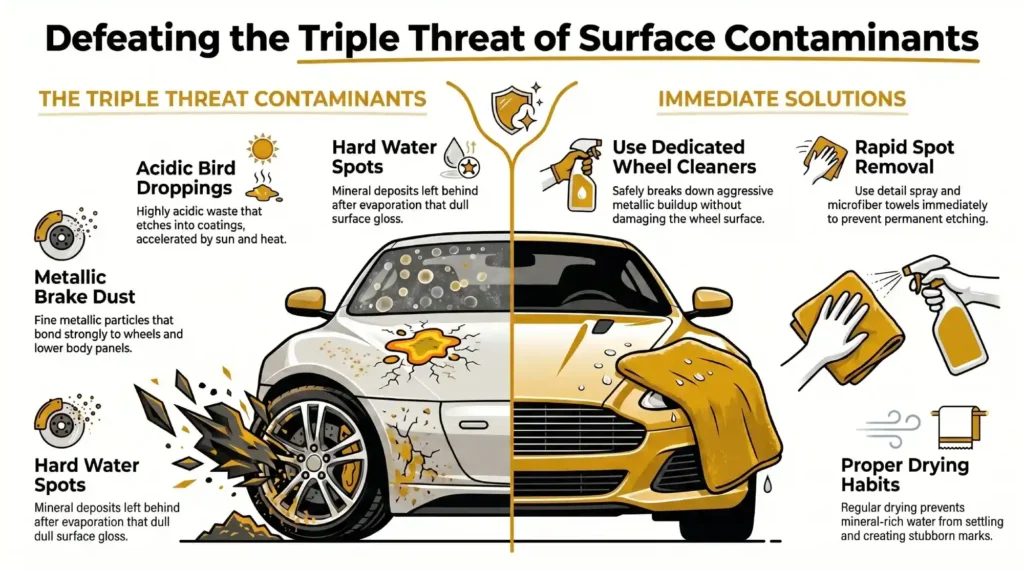
Brake dust is one of the most aggressive contaminants for daily-driven vehicles. It is created from brake pad wear and contains fine metallic particles that stick strongly to wheels and lower body panels. If not cleaned regularly, it can build up and become difficult to remove, especially in stop-and-go traffic conditions common in Orange County.
Using a dedicated wheel cleaner helps break down brake dust safely without damaging the wheel surface. Regular cleaning prevents long-term buildup and keeps both wheels and nearby painted surfaces in better condition.
Bird Droppings and Acid Damage Risk
Bird droppings are highly acidic and can damage ceramic coatings if left on the surface for too long. Heat from the sun in areas like Anaheim speeds up this chemical reaction, increasing the risk of etching into the coating layer.
The safest approach is quick removal using a detail spray and a soft microfiber towel. This reduces the chance of permanent marks and keeps the surface protected. Delayed cleaning increases the risk of dull spots or surface stains that may require correction work.
Water Spots from Hard Water Exposure
Water spots occur when mineral-rich water dries on the paint surface. These minerals remain after evaporation and create visible marks that reduce gloss. In California, hard water makes this a common issue during both washing and rainfall exposure.
Early removal is important because fresh water spots are much easier to clean than older ones. Once they settle into the surface, they may require stronger cleaning methods or professional treatment to fully remove. Regular drying and proper washing habits help prevent this issue from developing in the first place.
Safe Product Usage for Ceramic Coating Maintenance
Microfiber Towel Quality and Usage
Microfiber towels play a major role in protecting ceramic-coated surfaces during maintenance. Low-quality towels often trap dust or contain rough fibers that can create fine scratches on the paint. High-quality microfiber, on the other hand, lifts dirt safely without dragging it across the surface.
A proper maintenance routine also requires separating towels by purpose. One set should be used for washing, another for drying, and a separate one for detailing or applying products. This prevents cross-contamination, where dirt from one area (like wheels) gets transferred to clean painted surfaces. Keeping towels clean and organized helps preserve the coating’s smooth finish and gloss.
Detail Spray for Light Cleaning
Detail spray is used for quick maintenance between full washes. It is designed to remove light dust, fingerprints, and minor surface contaminants without disturbing the ceramic coating layer. This makes it useful for daily-driven vehicles that collect dust quickly in areas like Anaheim and Costa Mesa.
When applied correctly, detail spray helps maintain gloss and keeps the surface looking freshly cleaned. It also supports the hydrophobic effect by removing light residues that can weaken water-beading performance. However, it should not replace regular washing, as it is only meant for light cleaning.
Wheel Cleaner for Brake Dust Removal
Wheels collect significantly more brake dust compared to painted body panels. This is due to constant braking friction that releases fine metallic particles onto the wheel surface. If not cleaned regularly, this buildup becomes harder to remove and can affect both appearance and long-term surface condition.
A dedicated wheel cleaner is required because it is formulated to break down brake dust safely without damaging the wheel finish or surrounding coated surfaces. Regular use prevents heavy buildup and keeps wheels cleaner for longer periods, especially in stop-and-go traffic conditions common in Orange County driving.
Mistakes That Reduce Ceramic Coating Lifespan
Using Automatic Car Washes
One of the most common mistakes is using brush-based automatic car washes. These systems often reuse dirty water and use stiff brushes that can drag trapped dirt across the paint. Over time, this creates swirl marks and reduces the smoothness and gloss of the ceramic coating.
Even though ceramic coatings offer protection, they are not designed to resist mechanical abrasion from harsh washing systems. Hand washing remains the safest method for long-term coating preservation.
Using Harsh or Wax-Based Soaps
Many car soaps contain wax or gloss enhancers that may seem beneficial but actually interfere with ceramic coating performance. These additives leave behind a residue layer that blocks the hydrophobic surface.
When this happens, water stops beading properly and begins to sheet unevenly. The coating is still present, but its surface behavior is reduced. Using pH-neutral shampoo is the correct approach for maintaining long-term performance.
Ignoring Regular Maintenance Washes
Allowing dirt, dust, and road film to sit on the surface for too long leads to stronger bonding with the coating layer. This makes cleaning more difficult over time and reduces the coating’s self-cleaning effect.
Regular washing prevents this buildup and ensures the surface remains active. Vehicles that are washed consistently maintain better gloss, smoother feel, and stronger water-beading behavior compared to neglected coatings.
Professional Ceramic Coating Maintenance Support in Orange County
Professional ceramic coating maintenance goes beyond routine washing. It focuses on restoring the coating’s original performance through deeper cleaning and inspection. This includes removing embedded contaminants that cannot be safely handled with home washing methods.
In areas like Anaheim and Costa Mesa, where vehicles are exposed to UV rays, freeway dust, and coastal air, professional care helps maintain long-term coating stability. It ensures that both appearance and protective performance remain consistent over time.
What We Provide at OC Tint Solutions
At OC Tint Solutions, we offer ceramic coating maintenance services designed specifically for Orange County driving conditions. Our service approach focuses on restoring and protecting coating performance through structured care.
Our maintenance process includes:
- Hydrophobic layer restoration for improved water-beading
- Surface inspection and cleaning to detect early wear or contamination
- Contaminant removal treatment for brake dust, road film, and bonded particles
- Ceramic booster application to refresh gloss and surface slickness
This process helps ensure that ceramic-coated vehicles continue performing at a high level even under daily exposure to harsh environmental conditions in Southern California.
Need ceramic coating maintenance in Orange County? Restore gloss, water-beading, and paint protection today.
Book MaintenanceRecommended Maintenance Frequency for Best Results
Weekly Maintenance Wash
A weekly wash is the foundation of ceramic coating care. It removes loose dust, road film, and light contamination before it has time to bond with the surface. In Orange County driving conditions, especially around Anaheim and Costa Mesa, vehicles collect dust and freeway grime quickly, so keeping a consistent weekly wash schedule helps maintain strong hydrophobic performance and surface gloss.
Monthly Deep Clean
A monthly deep clean focuses on removing more stubborn contaminants such as brake dust, oil residue, and bonded road film. These particles cannot always be removed with a basic wash alone. A deeper cleaning process helps reset the surface condition and ensures the coating continues to perform properly over time.
Quarterly Booster Treatment
A ceramic booster treatment every few months helps restore water-beading performance and surface shine. It refreshes the top layer of protection and improves slickness, especially after repeated exposure to heat, UV rays, and dust. This step keeps the coating visually sharp and functionally active between major maintenance cycles.
Frequently Asked Questions
How do you maintain ceramic coating on a car?
Ceramic coating is maintained through regular washing using pH-neutral shampoo and microfiber towels. This removes surface contamination and keeps the coating’s hydrophobic effect active and consistent.
Does ceramic coating need special shampoo?
Yes, pH-neutral shampoo is recommended because it cleans the surface safely without breaking down the coating layer or leaving behind residue that can block water-beading performance.
How often should you wash a ceramic-coated car?
Most vehicles should be washed every 1 to 2 weeks. The exact frequency depends on driving conditions, exposure to dust, and whether the car is parked outdoors or indoors.
Can ceramic coating be damaged?
Yes, ceramic coating can lose performance if exposed to harsh chemicals, automatic brush washes, or poor maintenance habits. While the coating is durable, incorrect care reduces its effectiveness over time.
What restores ceramic coating performance?
Ceramic booster sprays and proper maintenance washing help restore gloss, slickness, and hydrophobic behavior. These steps refresh the surface without needing full reapplication.
Final Takeaway: Consistency Is What Protects Ceramic Coating
Ceramic coating performance depends on both application quality and long-term care. Even a professionally installed coating will gradually lose performance if maintenance is ignored. Regular washing, safe cleaning products, and periodic booster treatments keep the surface active and performing as intended. For drivers in Anaheim and Costa Mesa, daily exposure to sun, dust, freeway traffic, and coastal air makes maintenance even more important. A structured care routine ensures the coating continues to deliver strong protection, clean appearance, and easy maintenance over the long term.
At OC Tint Solutions, we help vehicle owners maintain ceramic coating performance through professional maintenance services designed specifically for Orange County conditions, ensuring lasting gloss, protection, and surface clarity.